Lithuanian Culture
Lithuanian culture is a blend of ancient Baltic traditions, centuries of European influence, and a fierce pride in a language and identity that survived everything the 20th century threw at it. It is expressed in song, in craft, in food, in festivals, and in the daily life of a people who know what it cost to be who they are.
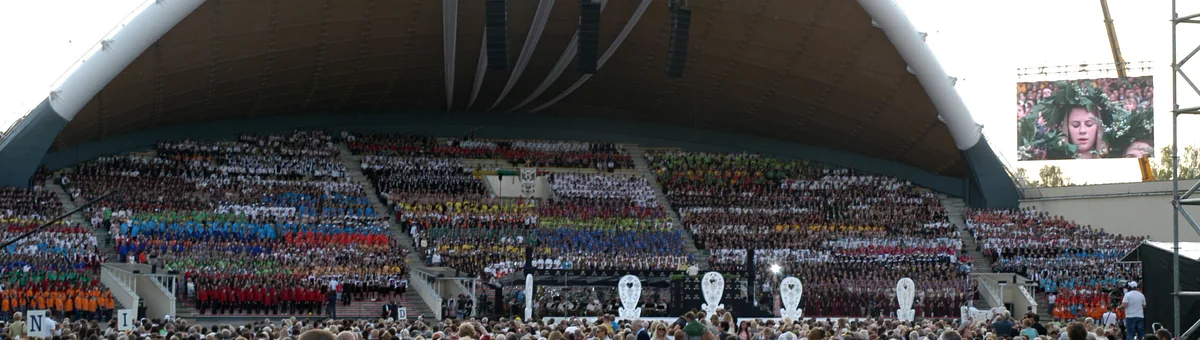
The Lithuanian Song and Dance Festival, one of Europe's largest folk gatherings
The Song Festival: Heart of the Culture
Every few years, Vilnius stops what it is doing. Tens of thousands of choristers and dancers from across Lithuania and from the Lithuanian diaspora around the world gather for the Song and Dance Festival. The first festival was held in 1924. Today it is one of the largest folk gatherings in the world, recognised by UNESCO alongside its Latvian and Estonian counterparts as Intangible Cultural Heritage of Humanity.
It is not simply a cultural event. It is a political symbol, an act of national memory. During the Soviet period, the Song Festival was one of the few places where Lithuanians could publicly express their identity. The songs were not just melodies. They were a language the Soviet authorities could not fully silence. When the participants of the Baltic Way joined hands in 1989, they sang the songs of the festival.
The Daina: Living Memory
Lithuanian folk songs, known as dainos, are one of the richest treasures in the world of vocal tradition. They are frequently polyphonic, with multiple voice lines weaving together in complex harmonic patterns. They sing about nature, love, work, death, wars, and peaceful mornings. Many of them are hundreds of years old.
What is remarkable is how alive these traditions are today. Youth ensembles across Lithuania learn old songs. Universities offer programmes in ethnomusicology. Parents teach their children the songs of their own parents. The tradition is alive not only in museums but in the rhythms of daily life.
"Lithuanians sing when they are born, when they die, and when they greet the summer. Song is not what they do. It is what they are."
Amber: Baltic Gold
Amber is as much a part of Lithuanian culture as the language or the flag. It is found on the Baltic shores, and the tradition of collecting and working it goes back thousands of years. Lithuanian amber jewellery, ranging from simple raw droplets to elaborate silver-and-amber creations, is found in every souvenir market and specialist jewellery shop.
But amber is not simply a souvenir. It carries cultural weight. Incorporating amber into wedding jewellery is an old tradition. Some believe in its healing properties, and you will find shops offering amber necklaces as a remedy for various ailments. Whether or not you agree with that, it is a genuine and long-standing belief.
Linen and Textile
Lithuania has deep traditions in linen weaving. The country was one of the most significant producers of linen cloth in Europe for centuries. Traditional Lithuanian textiles are often geometric, using black, white, and earthy red-brown dyes. They were used for everything from tablecloths to suiting fabric, from pillowcases to ceremonial shawls.
Traditional linen textiles are still made in Lithuania today. Look for them in specialist shops and at markets in Vilnius and other cities. They are among the most valuable and authentic souvenirs you can bring home.
Festivals and Traditions Through the Year
February 16th (Independence Day) and March 11th (Restoration of Independence Day) are the largest national holidays, marked with genuine seriousness and deep feeling. Joninės, or St John's Night on June 24th, is the oldest and most joyful of all: the summer solstice celebration with bonfires, fern garlands, and dancing beside rivers and lakes. Kūčios (Christmas Eve) is a particularly important family celebration with twelve meatless dishes on the table, each representing a month of the year.
Contemporary Art and the Creative Scene
Vilnius today has a genuinely busy contemporary art scene. Galleries, student exhibition spaces, and independent creative centres are found across the city. The Uzupis district is a natural gravitational centre, but artistic life has long since spread far beyond its borders. Lithuanian photographers, sculptors, and textile artists are winning international recognition. The street art of Vilnius is significant: not simply graffiti, but carefully constructed murals that speak to the city's history and its present moment.
The Lithuanian Language as Culture
To understand Lithuanian culture you have to understand that the language itself is a cultural act. It is one of the oldest living languages in the world, closer to ancient Sanskrit than most European tongues. For forty years in the 19th century it was banned in print. It survived because ordinary people risked their freedom to keep it alive. When Lithuanians speak their language today, even in a casual conversation, they are participating in a tradition of resistance and identity that stretches back centuries. That awareness is never entirely absent.