Šiauliai
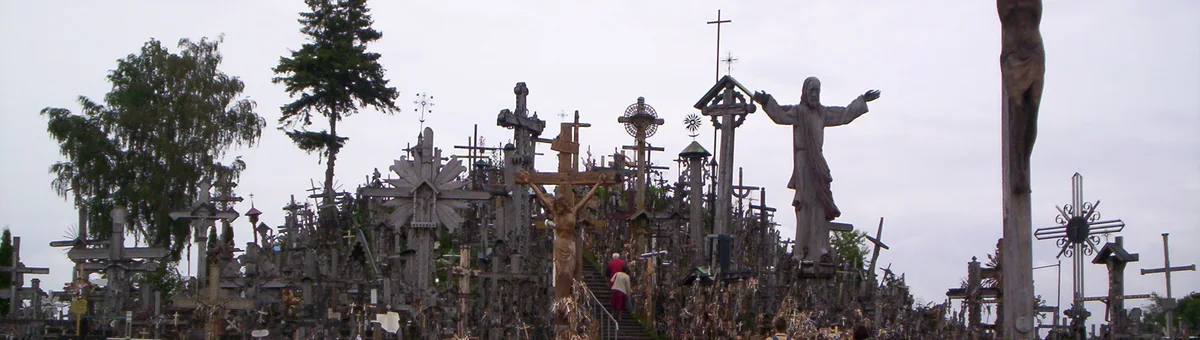
Most visitors to Siauliai come for one reason: the Hill of Crosses, one of Lithuania's most extraordinary and moving sights. But the city itself, Lithuania's fourth largest, has its own character worth a few hours of exploration.
Hill of Crosses near Šiauliai
Šiauliai at a glance
Top attractions in Šiauliai
Practical tips for visiting Šiauliai
Siauliai is well connected by rail and road. From Vilnius by train takes about 2 hours, from Kaunas about 1.5 hours. The Hill of Crosses is 12 km north of the city centre, easily reached by taxi or a local bus (check the local timetable). Most visitors combine the Hill of Crosses with a stop in Siauliai itself before continuing to Klaipeda or Riga.
Food and drink in Šiauliai
Siauliai has a straightforward and honest food scene. Look for traditional Lithuanian food in the city centre: dark rye bread, various preparations of pork, hearty soups, and potato dishes. The Saturday market in the city centre is a good place to try local produce. The city does not have a particularly notable restaurant scene compared to Vilnius or Kaunas, but there are comfortable and affordable options for a lunch stop before or after visiting the Hill of Crosses.
More than one sight
Most visitors arrive in Šiauliai with one thing in mind: the Hill of Crosses. This is entirely understandable. The Hill of Crosses is extraordinary. But reducing Šiauliai to a single attraction does the city a disservice. It is Lithuania's fourth largest city, a centre of the northern region, with its own industrial and cultural history worth a few hours of exploration.
The city was almost entirely destroyed during the Second World War, which means its centre is largely postwar construction rather than historic architecture. What it has instead is a certain straightforward northern Lithuanian character: wide streets, a busy Saturday market, a decent selection of restaurants and cafes, and a population that tends to be somewhat more reserved than in Vilnius but no less friendly once contact is made.
The surrounding region of Samogitia (Žemaitija) is one of the most distinctive in Lithuania, with its own dialect, folk traditions, and slightly melancholic personality. The Samogitians are known throughout Lithuania for their stubbornness, which they take as a compliment. Their region held out longest against Christianisation, longest against incorporation into any larger state, and longest against various occupiers.
The Hill of Crosses in detail
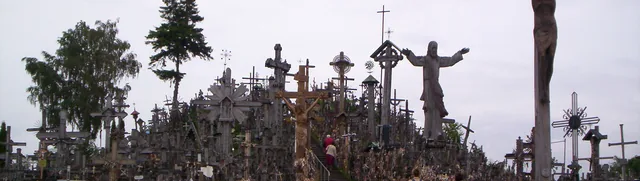
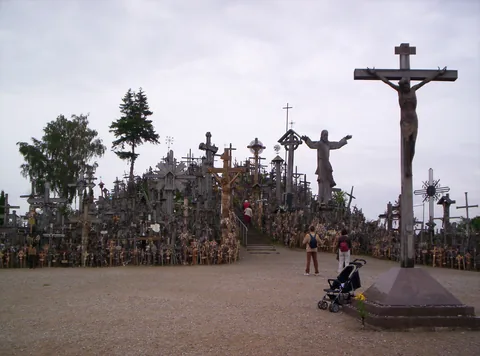
The Hill is around 12 kilometres north of Šiauliai centre, easily reached by taxi in 15 minutes or by local bus. The site itself is not large: a low mound rising a few metres above the flat surrounding farmland, approached by a path through a small pine grove. What covers it is what makes it unlike anything else on earth.
Nobody knows exactly how many crosses are there. Estimates range from 100,000 to over 200,000, accumulated over generations. They range from tiny tin crosses the size of a finger to elaborate five-metre wooden structures. Catholic crosses and Lithuanian folk crosses, crosses with photographs and names of the dead, crosses left by pilgrims from dozens of countries. Pope John Paul II visited in 1993 and left a cross of his own. The Soviets bulldozed the site three times between 1961 and 1975. Each time, within weeks, the crosses reappeared. The site survived everything.
Visit early in the morning if possible. In the low light the scale of the place becomes clearer, and the sound of wind through thousands of crosses and bells and mementos has a quality that is very difficult to describe.