What šaltibarščiai are
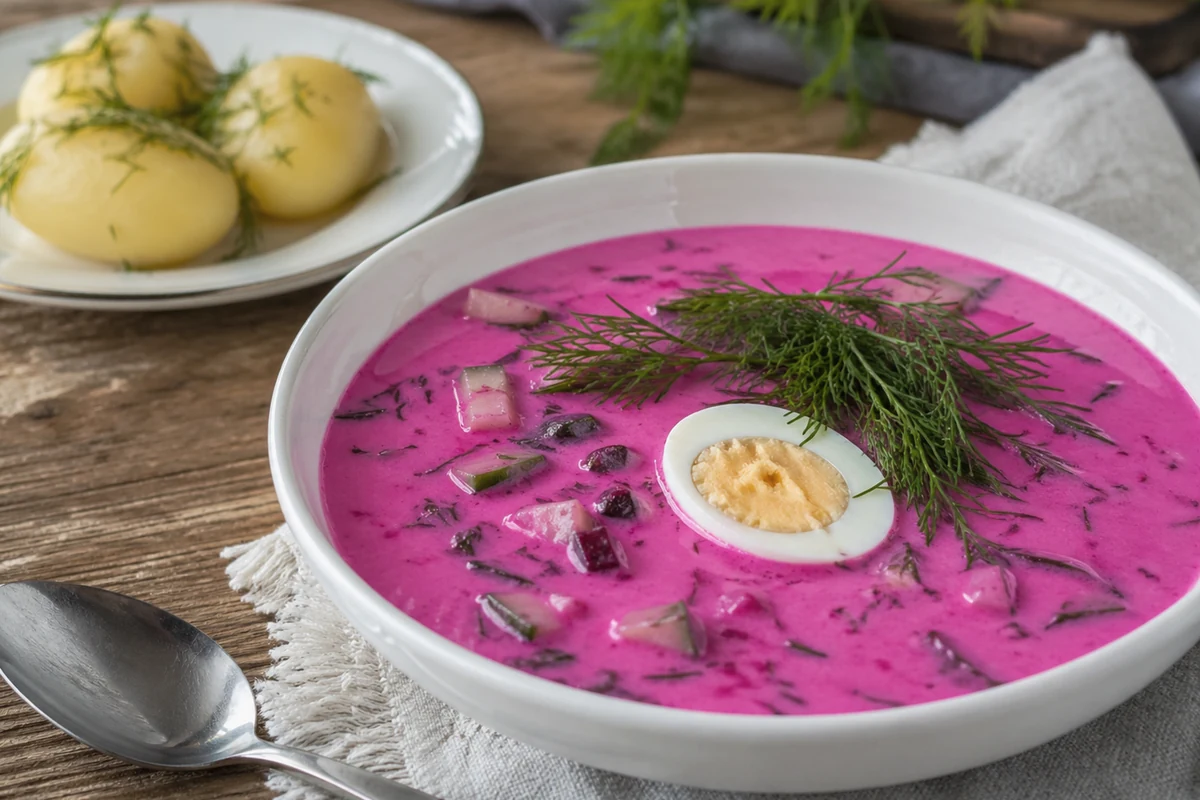
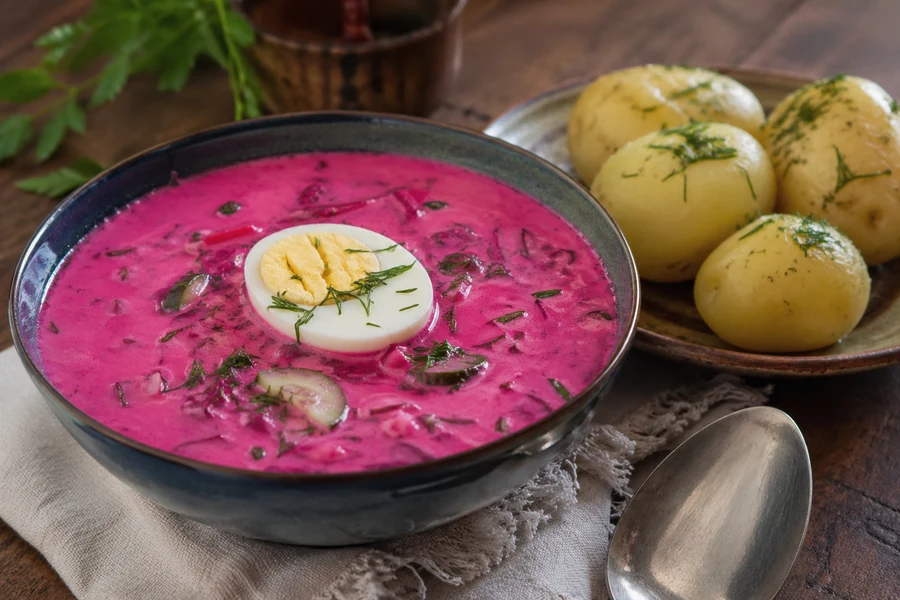
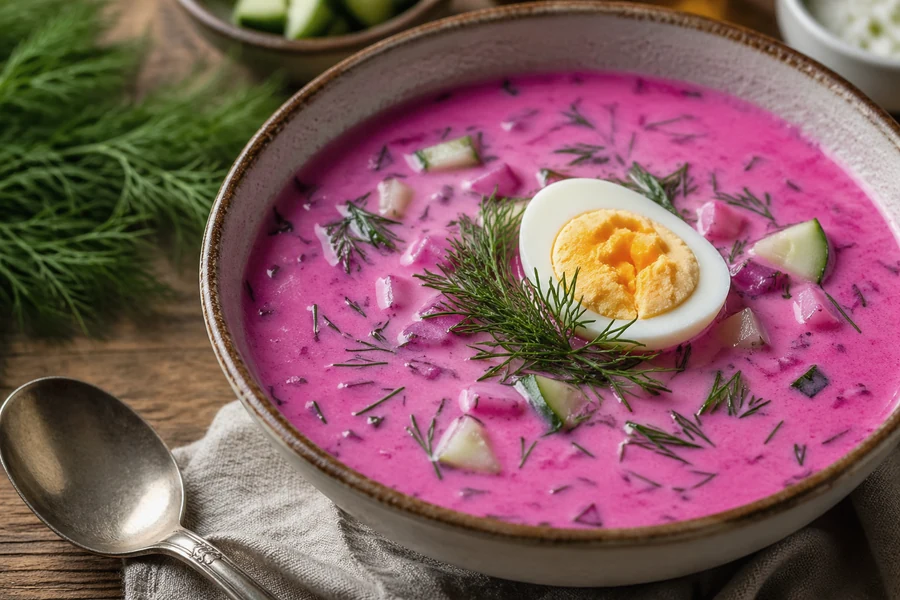
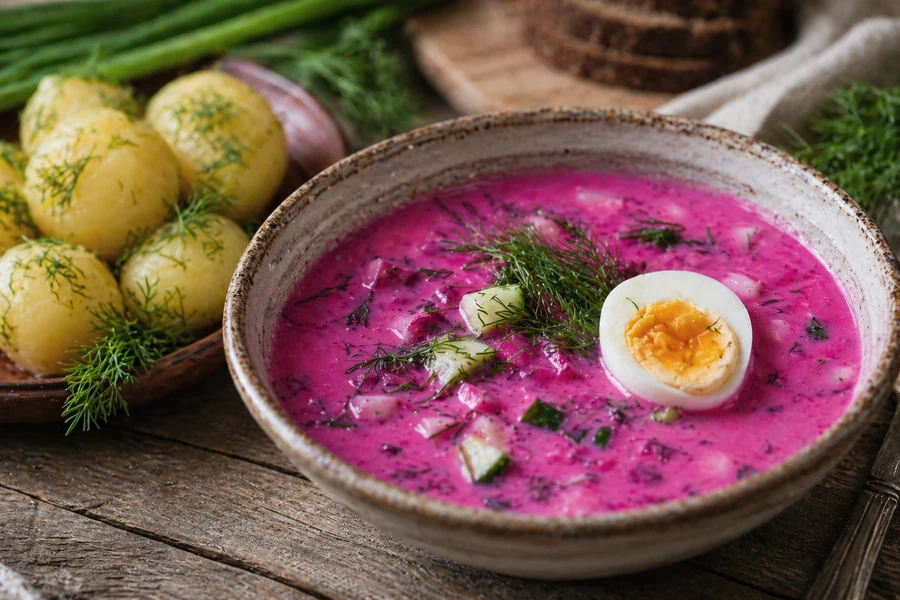
Šaltibarščiai are a cold soup of fermented dairy (kefir or buttermilk) and grated cooked beetroot, finished with chopped cucumber, dill, spring onions and hard-boiled egg, served chilled with a side bowl of hot boiled potatoes. The contrast between the cold soup and the hot potatoes is the defining textural feature of the dish, and the visual contrast between the brilliant magenta soup and the white potatoes is why it appears so often in Lithuanian summer food photos.
It is genuinely cooling and reasonably nutritious. The fermented dairy base makes it lighter than it looks, the beetroot provides earthy sweetness, and the cucumber and dill keep it fresh. A standard portion is about 350 ml of soup with two or three small boiled potatoes on the side; it suits a light lunch or a starter before a larger meal.
History and origins
Cold beet soup is not uniquely Lithuanian. Variations exist across Belarus, Poland, Ukraine and Russia, all rooted in the same medieval Slavic and Baltic tradition of using fermented dairy as a base for vegetable soups during the warm months when fresh milk would not keep. The Lithuanian version is most closely related to the Belarusian khaladnik and the Polish chłodnik, and the three names are linguistic variants of the same root word meaning "cold" or "chilled".
What makes the Lithuanian version distinctive is the balance: more kefir relative to beet juice than the Polish or Belarusian versions, more dill, and the firm convention of serving with separately-cooked hot potatoes rather than including any cooked element in the soup itself. This version was codified during the inter-war period and reinforced during the Soviet era when it became a fixture of canteen menus from June onward.
The colour, often described by foreign visitors as "alarmingly pink", is largely a product of using kefir (which is white) rather than soured cream as the base. The diluted beet juice combined with white kefir produces the characteristic shocking magenta. Polish chłodnik, made traditionally with sour cream, has a darker, more burgundy tone.
Regional variations and modern interpretations
The most common variation is buttermilk (pasukos) instead of kefir; this gives a slightly thinner soup with a more straightforward sour flavour. Some country versions add a small amount of grated horseradish or a pinch of salt-cured dill cucumber juice for extra tang. Modern restaurant versions sometimes include cooked prawns or salmon, which works flavourwise but is a clear departure from the traditional vegetarian base.
In the southern Suvalkija region, šaltibarščiai are sometimes made with sour cream rather than kefir, giving a richer, less acidic soup. In the Klaipėda area, you will see versions with diced cooked beet rather than grated; the texture is different but the flavour is similar.
Beetroot itself can be raw-grated and quickly pickled, or pre-cooked and grated. The pre-cooked version is more common in restaurants and homes; the raw-grated version is the older tradition and gives a slightly firmer, sharper flavour. The vinegar and sugar adjustments needed to balance raw beet take some practice.
Common mistakes when making it
The first mistake is not chilling the soup long enough. Šaltibarščiai needs to sit in the fridge for at least two hours after assembly so the flavours marry; four to six hours is better. Eaten immediately, it tastes thin and disjointed.
The second mistake is too much beet juice. The soup should be pink-red, not blood-red. Start with two cooked beets per litre of kefir and adjust upward only after tasting.
The third mistake is salting too aggressively. Kefir is already slightly tangy; add salt last and conservatively, tasting as you go. A heavy hand turns the soup unpleasant.
Finally, do not serve the potatoes in the soup. They go on the side, hot, in their own bowl. Mixing them in defeats the temperature contrast that is the whole point of the dish.
How to serve šaltibarščiai
Serve in deep bowls, ideally pre-chilled in the fridge for fifteen minutes. The boiled potatoes go on a separate plate or in a small bowl alongside, hot and tossed with a little melted butter and dill. Some homes also put a halved hard-boiled egg in the soup itself; others serve the egg separately on the potato plate.
The drink pairing is uncomplicated: a cold lager (Švyturys, Volfas Engelman) or sparkling water. White wine works in a pinch but is not traditional. The soup itself is mildly alcoholic-tasting from the kefir but contains no actual alcohol.
Šaltibarščiai is a defining Lithuanian summer lunch and appears on many restaurant menus from late May through early September. Outside that window most restaurants will not have it on the menu; some upscale places do offer a winter version, but this is unusual and considered slightly unserious.
Where to try the best ones in Lithuania
The best šaltibarščiai are usually found in family-run restaurants and home-style kitchens rather than in tourist-route establishments. In Vilnius, Etno Dvaras, Saula and Forto Dvaras chain locations all serve a reliable canonical version. Senoji Trobelė in Žvėrynas does an excellent home-style version.
In Kaunas, Žaliakalnis Restaurant and Berneliu Užeiga both serve solid versions. In Klaipėda, the Memel Old Town restaurants tend to lean slightly Lithuanian-German fusion in their cold-soup interpretations; the more traditional version is found at the homestyle restaurants near the central market.
For a true comparison test, the Trakai homestyle restaurants on the Karaim street serve šaltibarščiai alongside the local Karaim kibinai - the temperature and texture contrast between the two dishes is part of what makes Trakai a popular summer day-trip.
Ingredients (serves 4)
- 1 litre kefir (or buttermilk for a thinner soup)
- 2-3 medium beetroots, cooked, peeled, and coarsely grated
- 3 medium cucumbers, peeled and finely diced
- 4 medium hard-boiled eggs
- 1 large bunch fresh dill, finely chopped
- 4 spring onions, finely chopped
- 1 teaspoon salt (start with less, taste, add more)
- 1 teaspoon white sugar (optional, balances acidity)
- 1 tablespoon white wine vinegar (optional, sharpens flavour)
- 600 g new potatoes (waxy, small), to serve hot on the side
- Butter and extra dill for the potatoes
Method
- Cook the beetroots in advance: simmer whole, unpeeled, in salted water for 35-45 minutes until tender. Cool, peel, and coarsely grate. (Alternative: roast at 180C for 50 minutes wrapped in foil.)
- In a large bowl, combine the kefir with the grated beetroot. Whisk gently to distribute the colour evenly. The mixture should be a vivid pink-magenta.
- Add the diced cucumber, chopped dill, and spring onions. Stir gently. Taste and add salt, sugar, and vinegar as needed. The soup should taste tangy, slightly sweet, fresh, and lightly salty.
- Cover and refrigerate for a minimum of 2 hours, ideally 4-6. The flavours need time to marry; this step is essential.
- About 25 minutes before serving, scrub the new potatoes (peel only if they are large or thick-skinned) and boil in salted water until tender. Drain.
- Slice the hard-boiled eggs in half. Just before serving, remove the soup from the fridge and ladle into chilled deep bowls. Top each bowl with two egg halves.
- Serve the hot buttered potatoes on a separate plate or in a small bowl alongside, with extra dill scattered over them. Each diner takes a spoonful of cold soup, then a bite of hot potato; the contrast is the point.