What cepelinai are
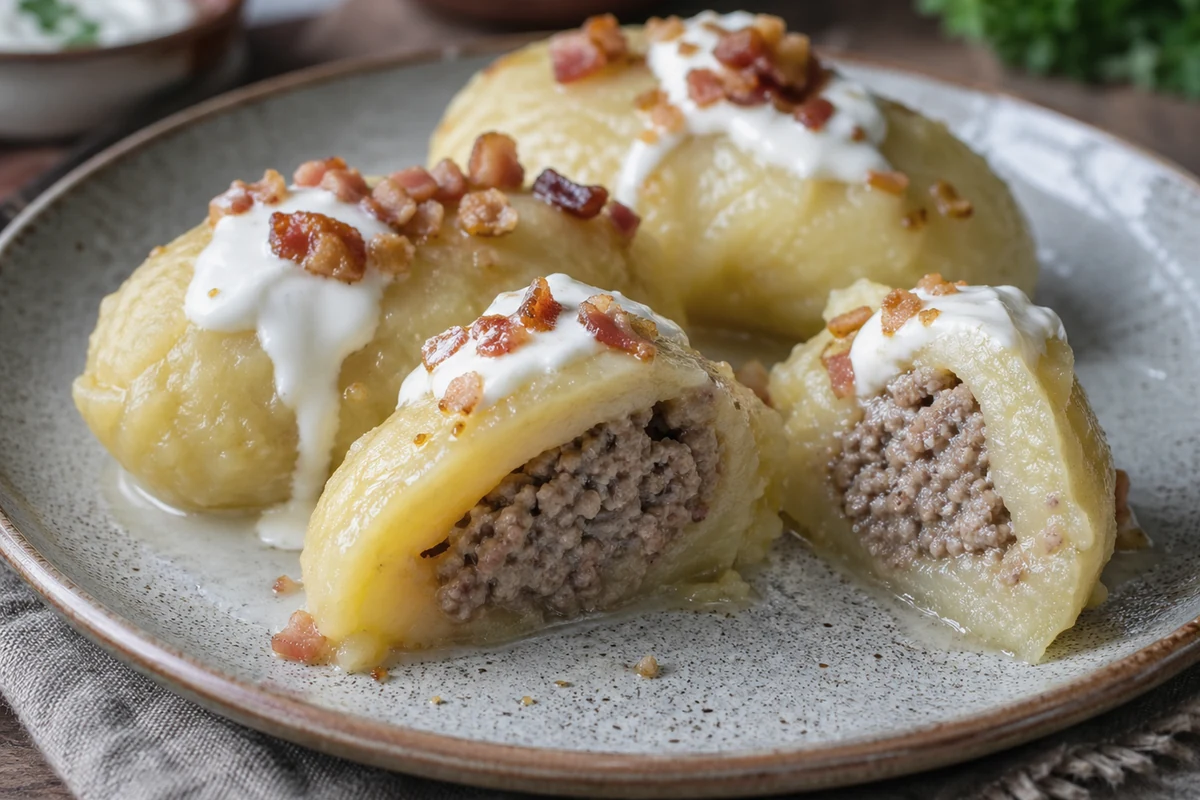
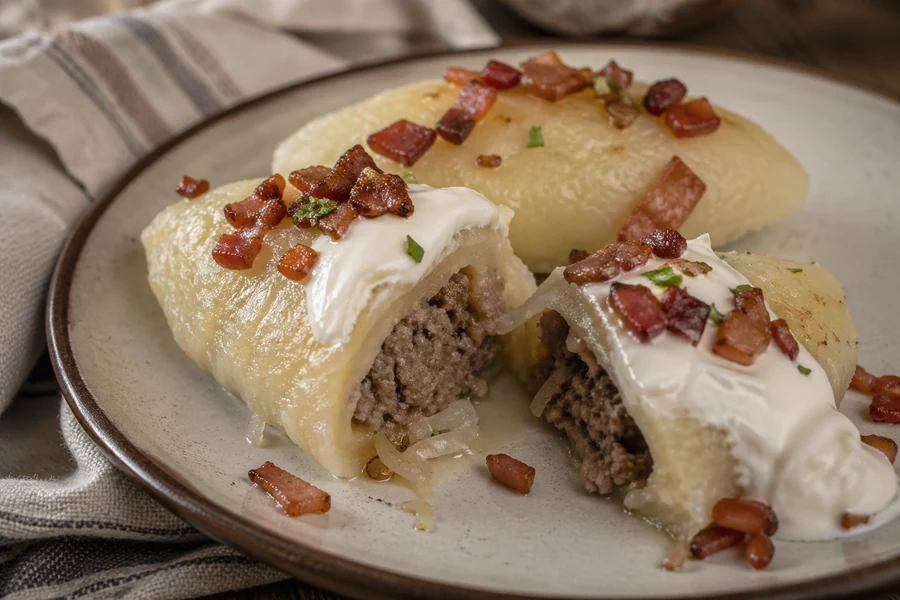
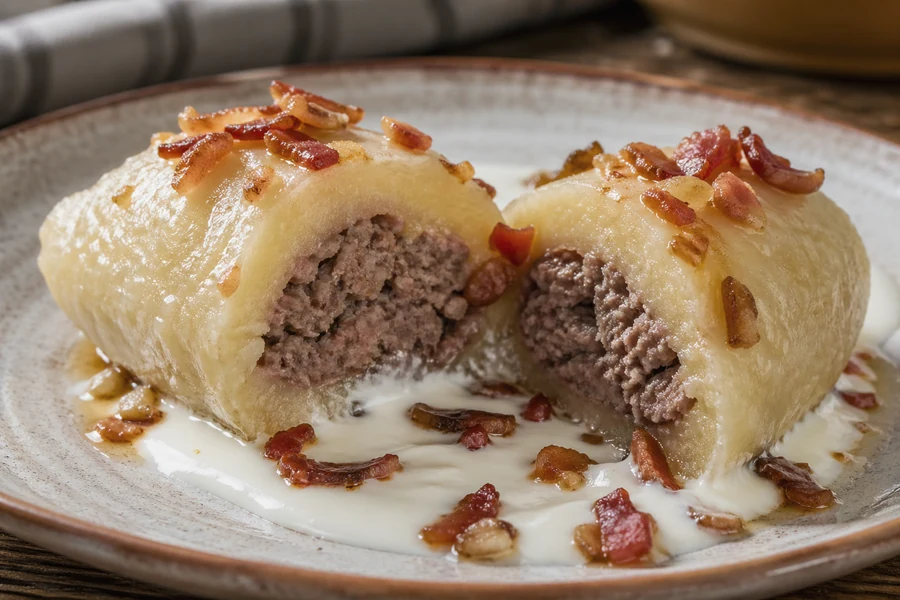
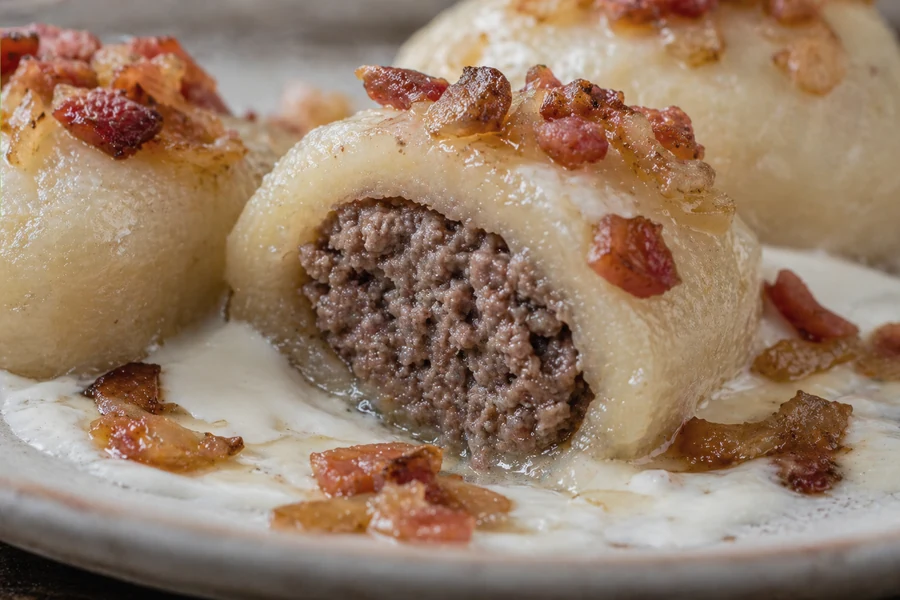
Cepelinai are large oval potato dumplings, roughly the size and shape of a small zeppelin airship, stuffed with seasoned minced pork and served with a sauce of sour cream and crispy fried pork fat. The dough is made from a careful balance of raw grated potato (squeezed dry) and cooked mashed potato, giving them a distinctive springy, almost glassy texture when cooked properly.
A standard portion is one or two cepelinai per person, weighing roughly 250 to 350 grams each. They are dense, filling, and structurally robust enough to be cut with a knife and fork without falling apart. Properly cooked cepelinai have a pale grey-translucent dough, a clean potato flavour with a hint of starch, and a firmly seasoned meat centre.
They are the dish foreign visitors most often hear about when asking what to eat in Lithuania, and the dish many Lithuanians cook only on weekends or for special meals because of the time involved. A standard recipe takes about ninety minutes from peeling potatoes to plating; an experienced cook with a helper can shorten that, but it is not a weekday dinner.
History and origins
Cepelinai are a relatively young dish in Lithuanian cuisine, despite their flag-bearing status. The name and the modern shape both date to the inter-war period of the 1920s and 1930s, when Count Ferdinand von Zeppelin's rigid airships dominated headlines across Europe. Before that, similar potato-based dumplings existed in the regional cuisine of southern Lithuania (particularly Dzūkija) and across the broader Polish-Lithuanian-Belarusian potato-eating belt, but they were called didžkukuliai (literally "big dumplings") rather than cepelinai.
The shift in name reflects a broader shift in the dish. Earlier didžkukuliai were typically smaller, often round, and made with a higher proportion of cooked potato, giving them a softer, fluffier texture. The torpedo shape and the firmer raw-grated dough that defines modern cepelinai emerged in the inter-war urban kitchens of Kaunas (then the temporary capital), where the dish became a fixed-menu staple of working-class restaurants and Sunday family lunches.
The potato itself is also relatively new to Lithuania. Although the plant arrived in the eighteenth century, it did not become a staple of the rural diet until the famine years of the 1840s, after which it rapidly displaced grains and cabbage as the foundation of everyday cooking. Cepelinai sit firmly within this potato-dominant chapter of Lithuanian food history rather than belonging to any deeper medieval tradition.
Why the airship name stuck
The choice of name in the 1920s was both visual and slightly ironic. Zeppelin airships were modern, exotic, and impressively large; the dumplings, then a humble peasant food being upgraded into urban restaurant fare, were also surprisingly large. The airship comparison made the dish feel modern and aspirational while keeping its rural soul.
The name has stuck through every political era since, including the Soviet decades when Lithuanian-language dish names were sometimes officially Russified. Cepelinai stayed cepelinai. In casual conversation many older Lithuanians still call them didžkukuliai, particularly in southern villages, but cepelinai is the standard restaurant name and the name foreign visitors will see on every menu.
Regional variations
The most common variation is the filling. Pork mince with onion, salt, pepper, and marjoram is the standard, but versions with curd cheese (varškė), with mushrooms (often chanterelles or porcini in autumn), or with a meatless mashed-potato-and-onion filling all exist. Curd-cheese cepelinai are the lightest and a good entry point for visitors who find the standard version too rich.
Sauces also vary. The most common is a simple combination of sour cream and rendered pork fat with crispy fried pork pieces (spirgučiai). Some restaurants serve cepelinai with a tomato-and-bacon sauce or with a mushroom cream sauce; both are acceptable variations but the sour cream and spirgučiai version is considered canonical.
Aukštaitija and Žemaitija both make cepelinai with subtle differences in texture - the Žemaitijan version tends to be slightly softer and uses a higher proportion of cooked potato. Suvalkija makes a smaller, more compact version that some cooks distinguish from cepelinai by the older name didžkukuliai. Dzūkija, where the dish is rooted, often serves them with mushroom rather than meat fillings during autumn.
Common mistakes when making them at home
The most common mistake is not squeezing enough liquid out of the raw grated potato. The potato should feel dry and almost crumbly in your hand before you mix it with the cooked mashed potato. Wet dough leads to dumplings that collapse during cooking.
The second mistake is making the dough too thick around the filling. The wall of potato dough should be roughly half a centimetre, not more. Thicker walls cook unevenly and dilute the meat-to-dough balance.
The third mistake is cooking them at too aggressive a boil. The pot should be at a gentle simmer with steady but not violent bubbling. A rolling boil will tear the dumplings apart. They should sink, then rise to the surface after about fifteen minutes, then continue to cook for another fifteen to twenty.
Finally, do not skip the lemon juice or vinegar in the grated potato. A small acidic addition (one tablespoon of lemon juice per kilogram of potato) prevents the raw potato from oxidising into an unappealing grey-pink colour while you finish the dumplings.
How to serve cepelinai
Serve hot, two per person, on a wide flat plate with the sauce poured generously over the top. The sauce is the second flavour star of the dish: rendered pork fat with crispy pork pieces (spirgučiai) folded into thick sour cream just before serving, with a small amount of finely chopped onion or chives if you have them.
A cold beer is the traditional drink pairing, particularly a Lithuanian unfiltered lager such as Volfas Engelman, Švyturys Ekstra or one of the smaller craft beers from the regional breweries. Lithuanian gira (a dark fermented rye-bread drink, mildly alcoholic) is the non-beer alternative. Wine works less well; the dish is too dense and starch-heavy for most reds and most light whites.
A small green salad or pickled cucumbers and beetroots on the side helps cut through the richness. Many home cooks also serve a small bowl of clear chicken or vegetable broth as a starter to take the edge off the heaviness of the main course.
Where to try the best ones in Lithuania
In Vilnius, the standard recommendation for tourists is Bernelių Užeiga (with several locations including the Old Town), which serves a reliable canonical version. Etno Dvaras chain locations also do them well. For a more authentic, less-touristy version, the small homestyle restaurant Senoji Trobelė in the Žvėrynas district is widely respected.
In Kaunas, Avilys (the brewpub on Vilniaus street) and Berneliu Užeiga both serve solid cepelinai. The Žaliakalnis Restaurant near the funicular has a long-standing reputation for them.
For a regional version, the small restaurants in Druskininkai (Dzūkija, the dish's home region) and the sodybos in the Aukštaitija National Park often serve cepelinai cooked at home rather than in a restaurant kitchen. These are usually larger, less polished, and substantially better than the tourist-route versions.
Ingredients (serves 4)
- Dough: 1.5 kg waxy raw potatoes, peeled
- Dough: 250 g cooked potato (boiled the day before, mashed)
- Dough: 1 tablespoon lemon juice or white vinegar
- Dough: 1 teaspoon salt
- Dough: 1 tablespoon potato starch (optional, helps binding)
- Filling: 400 g minced pork (shoulder, not lean)
- Filling: 1 medium onion, finely chopped
- Filling: 1 teaspoon salt
- Filling: 1/2 teaspoon black pepper
- Filling: 1/2 teaspoon dried marjoram
- Sauce: 200 g smoked pork belly or thick-cut bacon, diced small
- Sauce: 1 medium onion, finely chopped
- Sauce: 300 ml sour cream (full-fat)
- Sauce: 2 tablespoons finely chopped chives or green onion
Method
- Peel and grate the raw potatoes into the finest grater holes you have, working in batches so the grated potato does not sit too long. Add the lemon juice as you go to prevent oxidation.
- Place the grated potato in a clean tea towel or muslin and squeeze hard over a bowl. Reserve the squeezed liquid in a separate bowl and let the starch settle to the bottom for ten minutes.
- Pour off the cloudy liquid from the reserved bowl, leaving the white starch at the bottom. Mix this starch back into the squeezed grated potato along with the mashed cooked potato, salt, and the optional tablespoon of potato starch. Mix thoroughly. The dough should hold its shape when pressed.
- For the filling, gently soften the chopped onion in a tablespoon of oil until translucent, about 4 minutes. Cool completely. Mix with the raw mince, salt, pepper, and marjoram. Do not cook the meat - it cooks inside the dumpling.
- With wet hands, take a fistful of dough (about 200 g), flatten it into a thick disc, place 70-80 g of filling in the centre, and close the dough around it carefully. Form into a rounded torpedo shape. Repeat for 8 dumplings.
- Bring a large wide pot of well-salted water to a gentle simmer. Lower the dumplings in one by one. Cook at a gentle simmer (no rolling boil) for 30 to 35 minutes once they rise to the surface.
- Meanwhile, fry the diced pork belly slowly in a dry pan until the fat renders and the pieces are crisp. Add the chopped onion in the last 2 minutes and soften lightly. Remove from heat.
- Just before serving, stir the sour cream into the warm bacon-and-onion mixture (off heat, so the cream does not split). Plate the dumplings, pour the sauce generously over, and finish with chives.