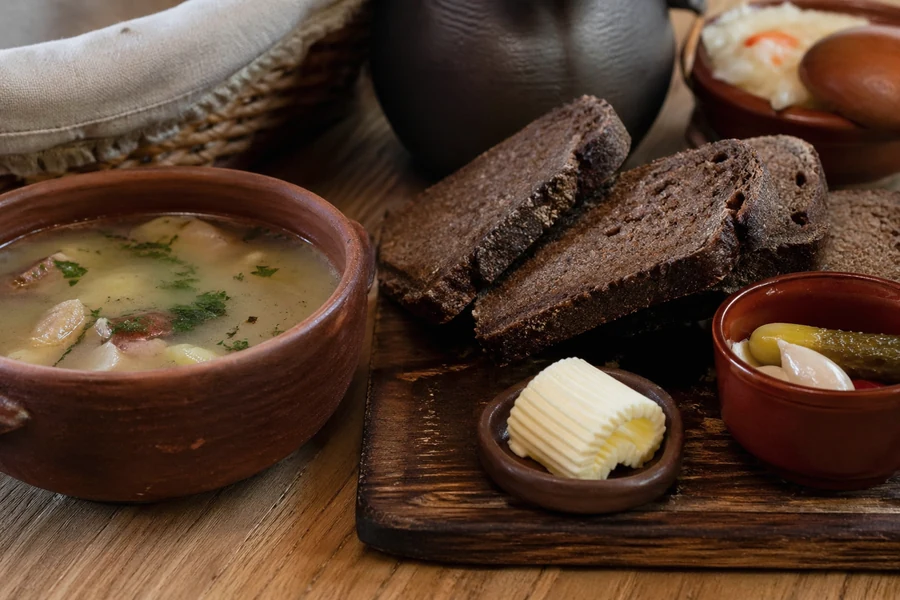
What ruginė duona is
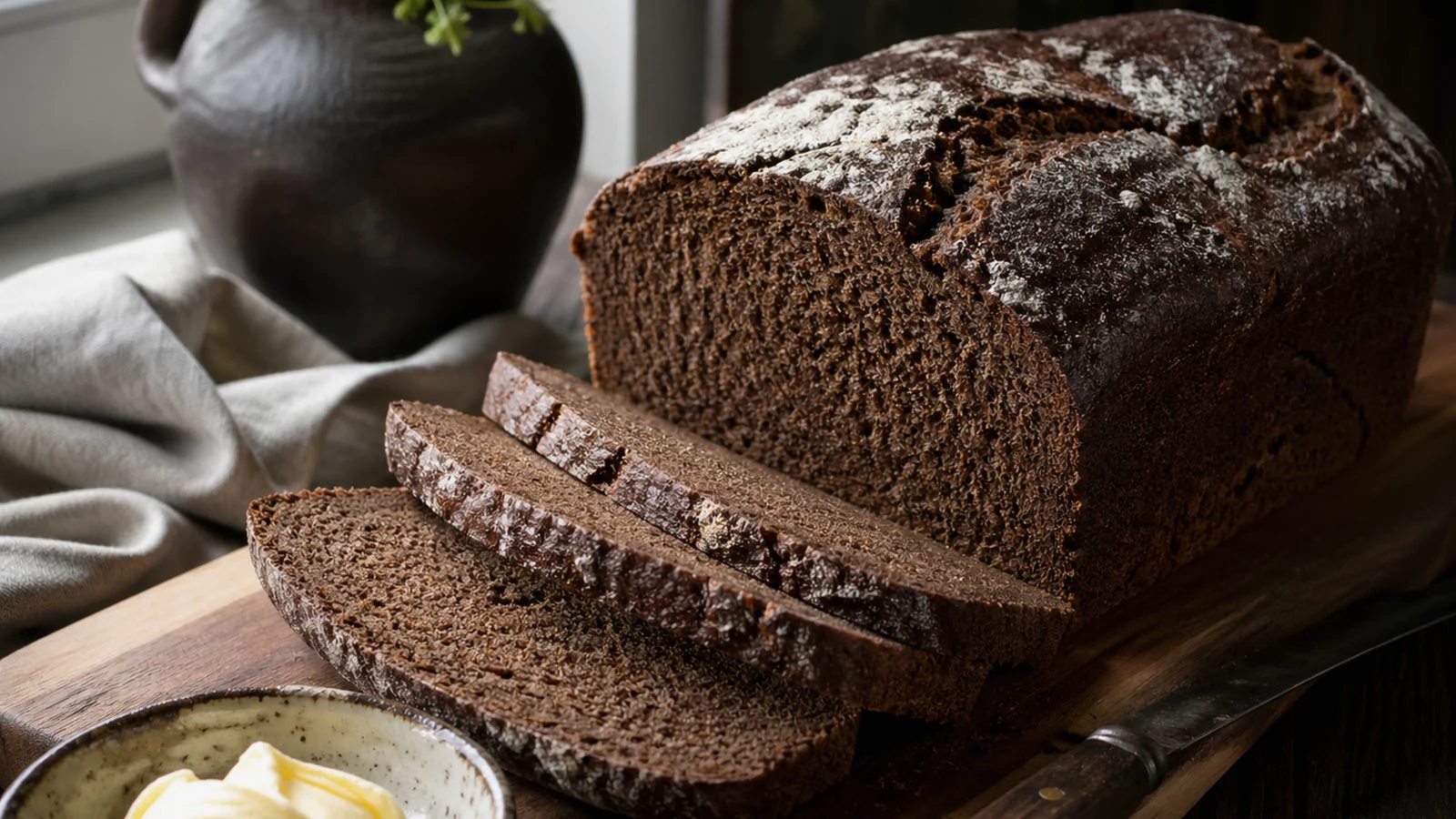
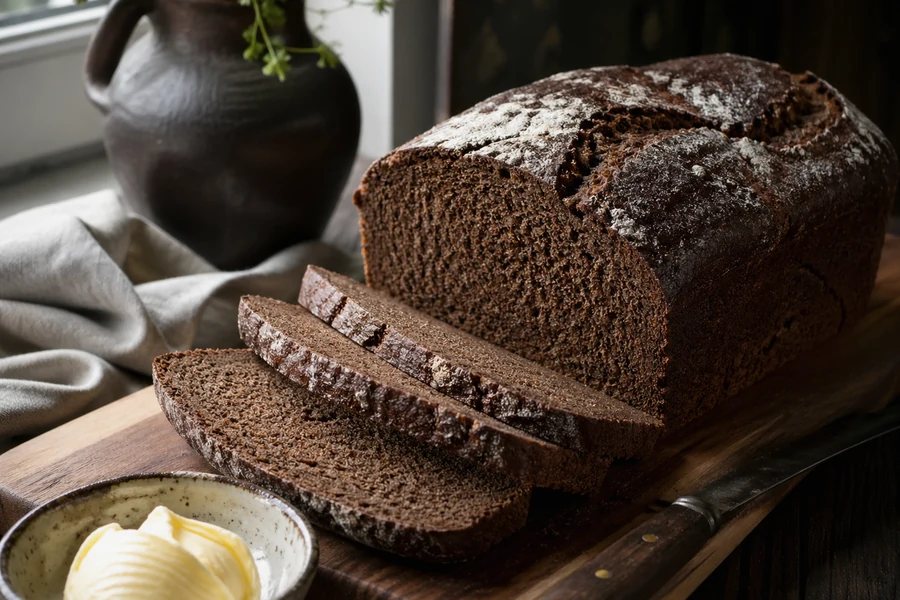
Naminė ruginė duona ("homemade rye bread") is a dense, dark, sourdough-fermented bread made primarily from rye flour, with a characteristic firm crumb, a deeply browned thick crust, and a slightly sour, deeply complex flavour from the long natural fermentation. A traditional loaf weighs 1.5-3 kilograms, has a domed top, and is baked directly on a hot oven floor or stone with leaves underneath (traditionally calamus leaves, ajeras) for the characteristic patterned bottom.
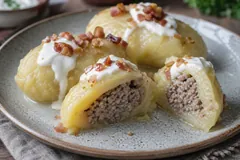
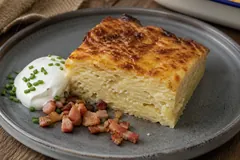
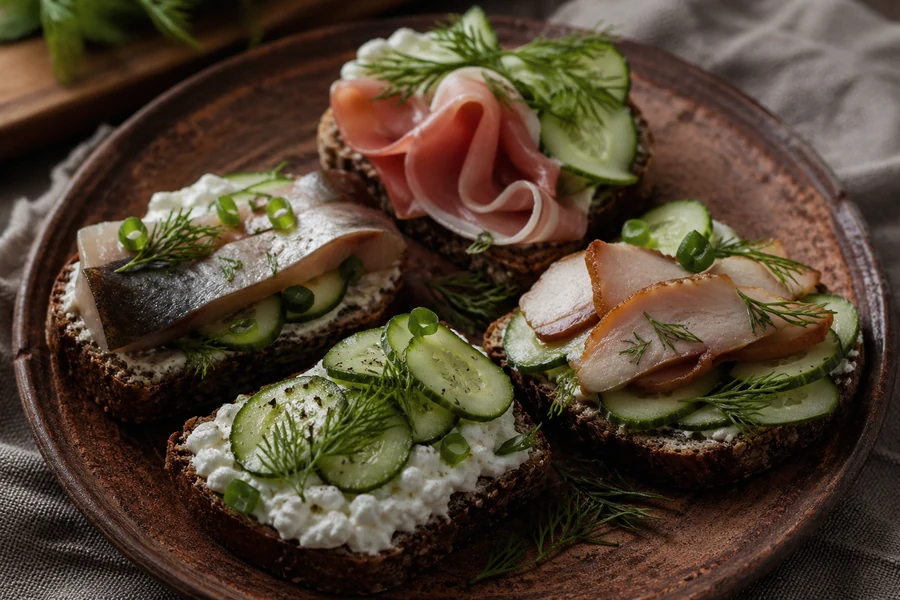
It is sliced thinly (5-8 millimetres) and eaten at every meal in traditional Lithuanian cooking. With breakfast: rye bread with butter and curd cheese, or with smoked meat and pickled vegetables. With lunch: alongside soup, with cepelinai or kugelis, as the foundation for an open sandwich. With dinner: with cured meat and cheese, or made into a soup base (rugine duonos sriuba) using stale rye bread chunks. Rye bread is so foundational to Lithuanian eating that the phrase "valgyti duoną" (literally "to eat bread") is sometimes used as a simple synonym for "to live".
History and origins
Rye bread has been the staple grain of Lithuanian cooking for over a thousand years - longer than potatoes (which are a 19th-century arrival), longer than wheat (which has always been a secondary grain in northern Lithuanian cooking), longer than Christianity (which arrived in 1387 and inherited an already-established rye-bread culture). The cool, wet climate of Lithuania favours rye over wheat; rye grows reliably where wheat fails, and the resulting flour has historically been the cheapest and most reliable grain available to rural Lithuania.
The sourdough technique - which uses naturally-occurring wild yeasts rather than commercial baker's yeast - is itself ancient. Lithuanian farmhouses traditionally maintained a wooden trough (duonkubilis) holding a permanent sourdough culture; a small piece of dough was kept back from each baking to start the next, sometimes carrying a culture forward through generations. Some Lithuanian farmhouses still maintain sourdoughs descended from cultures inherited from grandparents.
The wood-fired oven at the centre of the traditional Lithuanian farmhouse (the central black-stone oven, juodkrosnė) was specifically designed for rye bread baking. The oven was fired with birch, alder or aspen wood until the inner walls reached cooking temperature, the ashes were swept out, and the bread was loaded onto the bare hot oven floor on calamus leaves. The same oven was then used through the day for stews, vėdarai, and other slow-cooked dishes as its heat declined.
Industrial rye bread production began in the late 19th century, but the traditional craft persisted alongside it through the Soviet era and continues today. Modern Lithuania has both: every supermarket sells multiple brands of mass-produced ruginė duona (Vilniaus duona, Klaipėdos duona, and several smaller bakeries are the main producers), and traditional craft bakeries continue baking by hand using the older techniques.
Regional variations
The most notable variation is the use of grain. Pure rye flour (100% ruginiai miltai) gives the densest, darkest, most traditional version. Mixed rye-and-wheat (typically 70-80% rye, 20-30% wheat) is the most common modern version - lighter, easier to slice, more accessible to wheat-bread eaters. Some Žemaitija recipes add a small amount of barley flour for a slightly different flavour.
Sweetness varies by region. Aukštaitija recipes tend to be deeply traditional and unsweetened - the malted-rye flavour is the only sweetness. Suvalkija and Dzūkija recipes sometimes add a tablespoon of honey or molasses per loaf for a richer flavour. Lithuanian-American versions often add caraway seeds, which in Lithuania itself is more of a Žemaitija and northern variation.
Top decoration varies. The traditional Aukštaitija version has no top decoration - the loaf is unscored, simply round and domed. Suvalkija versions are sometimes scored with a cross before baking; bakery versions sometimes have a stamped pattern. Wedding ruginė duona is decorated with elaborate dough patterns (similar to Polish chleb weselny) and given as a gift; this ceremonial bread is dense and rich and is meant to last for many weeks.
Crust style varies between thick (traditional, develops during slow oven cooling) and thin (modern, faster-baked). The thick traditional crust adds significant flavour and is much more durable; bread with this crust keeps for two weeks at room temperature.
Common mistakes
The first mistake is using a young or inactive sourdough culture. Ruginė duona requires a strong active sourdough; a young culture (less than two months old) gives a heavy, dense, undercooked bread. Use a well-established sourdough culture that has been in regular use.
The second mistake is rushing the bulk fermentation. Rye sourdough takes 12-18 hours of bulk fermentation at room temperature; commercial-yeast or wheat-bread expectations of 2-3 hours give an underdeveloped flavour and a heavy texture.
The third mistake is too high a baking temperature. Ruginė duona starts at high heat (240C) for 15 minutes to set the crust, then drops to 180C for the remaining 45-55 minutes. Constant high heat burns the crust before the inside cooks.
Finally, do not slice while warm. Rye bread continues "cooking" as it cools - the moisture redistributes from the crust into the crumb and the texture sets. Slicing warm gives gummy, unset bread; the loaf should rest at least 4 hours, ideally overnight, before slicing.
How to serve ruginė duona
Slice thin (5-8 millimetres) on a sharp serrated knife. Serve at room temperature; rye bread is rarely toasted in Lithuanian tradition, although it can be lightly toasted to refresh slightly stale slices.
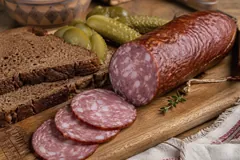
The standard accompaniments are: butter (always); curd cheese (varškė) plain or with herbs; smoked or cured meat (skilandis, smoked ham, salami); pickled fish (raw-cured herring, smoked eel); sour cream; honey; raw onion. A traditional Lithuanian breakfast is rye bread with butter, curd cheese, and cucumber.
Stale rye bread is never wasted. Common uses: rugine duonos sriuba (rye bread soup, a sweet dessert soup made by simmering stale bread chunks with apples, raisins, sugar and cinnamon); kepta duona (fried garlic rye bread snack served with beer); duonos sokoladas (a no-bake confection of stale rye bread, butter, sugar and cocoa); breadcrumbs for breading; croutons for salads. Some households genuinely never throw away rye bread.
Rye bread is also the ceremonial centrepiece of weddings (presented to the bride and groom by parents with salt, symbolising prosperity and life), funerals (placed on the grave as a symbolic offering), and house-warmings (gifted to new homeowners with salt for good luck). The cultural weight of the bread far exceeds its caloric weight.
Where to buy and try the best ruginė duona
Supermarket ruginė duona is generally good in Lithuania. The major brands - Vilniaus duona, Klaipėdos duona, Pajevonio duona, Lietuviška duona - all produce competent traditional-recipe rye bread. The "rustic" or "kaimiška" labelled versions are usually the best.
For artisanal hand-baked ruginė duona, the bakery Senoji Pekara in Vilnius (Old Town) is widely regarded as the country's best traditional bakery. Garstyčia in Kaunas Old Town does an excellent dark wedding-style rye. The Druskininkai bakery Romnesa's "Naminė" line is sold across the country and is reliably traditional.
For travellers wanting to try ruginė duona at its very best, the Sunday morning farmers' market at Vingio Parkas in Vilnius (in summer) often has small-producer rye bread baked the previous Friday or Saturday in a wood-fired oven; this version is closer to the historical farmhouse loaf than anything you can buy in a supermarket.
Some Aukštaitija and Žemaitija sodybos still bake their own ruginė duona for guests, fired in a working juodkrosnė traditional black-stone oven. Sodybos that offer this kind of visit (the Plateliai-area sodybos and several Aukštaitija National Park properties) are worth seeking out for the baking process as much as the bread itself.
Ingredients (1 large loaf, simplified home version)
- Sourdough starter (200 g): 100 g active rye sourdough culture, 50 g rye flour, 50 g water (mix and refresh 12 hours before baking)
- For the dough: 600 g rye flour (whole grain or dark)
- For the dough: 200 g strong white wheat flour
- For the dough: 500 ml warm water
- For the dough: 200 g refreshed sourdough starter (from above)
- For the dough: 15 g salt
- For the dough: 1 tablespoon honey or dark molasses (optional, for slight sweetness)
- For the dough: 2 teaspoons caraway seeds (optional, traditional in some regions)
- For shaping: extra rye flour for the bench
- For baking: a baking stone, Dutch oven, or heavy baking tray; calamus leaves traditionally line the bottom (parchment paper as substitute)
Method (two days)
- Day 1, evening: refresh your sourdough starter by mixing 100 g active rye sourdough culture with 50 g rye flour and 50 g water in a clean jar. Cover loosely. Leave at room temperature 8-12 hours; the starter should be doubled and bubbling actively when ready.
- Day 2, morning: in a large bowl, combine the rye flour, wheat flour, salt, optional honey, and optional caraway seeds. Add the warm water and 200 g of the refreshed sourdough starter. Mix into a sticky, dense dough; rye dough does not develop gluten the way wheat dough does, so it will not be smooth. Mix thoroughly for 5 minutes.
- Cover the bowl and let bulk-ferment at warm room temperature (22-25C) for 12-18 hours. The dough should rise noticeably (about 50-75% in volume - rye does not rise as much as wheat) and develop a complex tangy aroma.
- Turn the dough onto a heavily-floured surface. Shape gently into a round dome - do not knead, which deflates rye dough. Place on a piece of parchment (or calamus leaves if available).
- Cover and let proof for 1-2 hours, until the dough is jiggly and visibly puffed.
- Preheat oven to 240C with the baking stone or Dutch oven inside, for at least 45 minutes.
- Carefully transfer the loaf onto the hot stone or into the Dutch oven. If using a Dutch oven, cover for the first 25 minutes. Bake at 240C for the first 15 minutes, then reduce to 180C and continue baking for 45-55 minutes more (uncovered if using Dutch oven from minute 25). The bread is done when the crust is dark mahogany brown and the bottom sounds hollow when tapped.
- Cool on a wire rack at least 4 hours, ideally overnight, before slicing. The flavour and texture continue to develop during cooling.