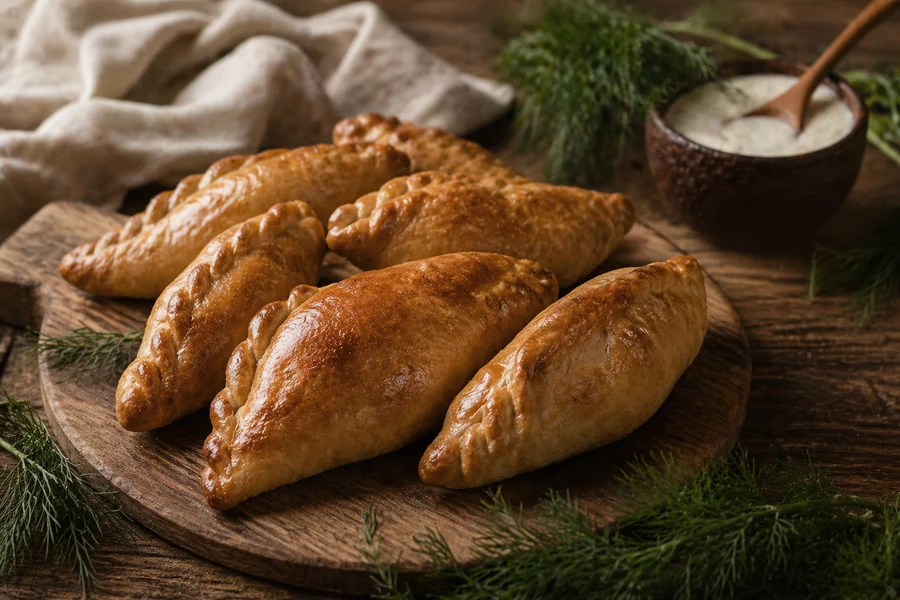
What kibinai are
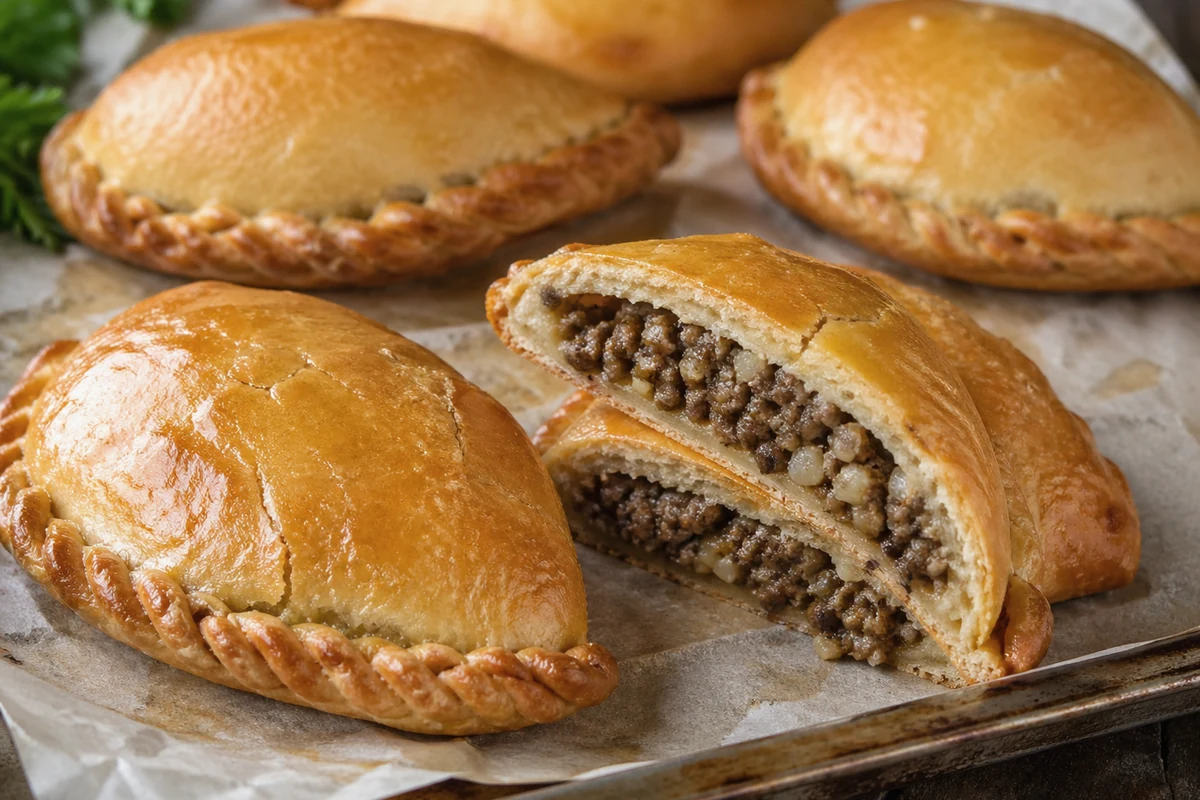
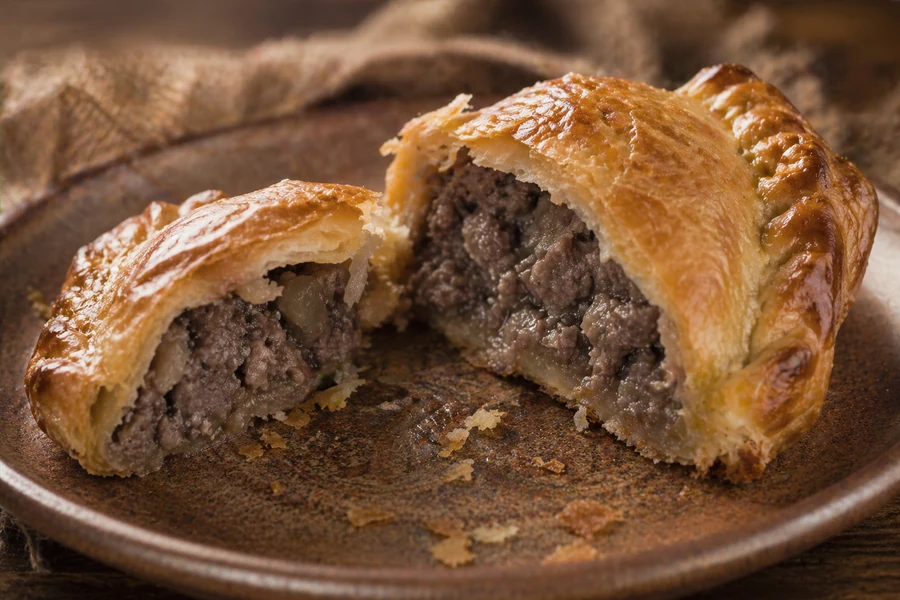
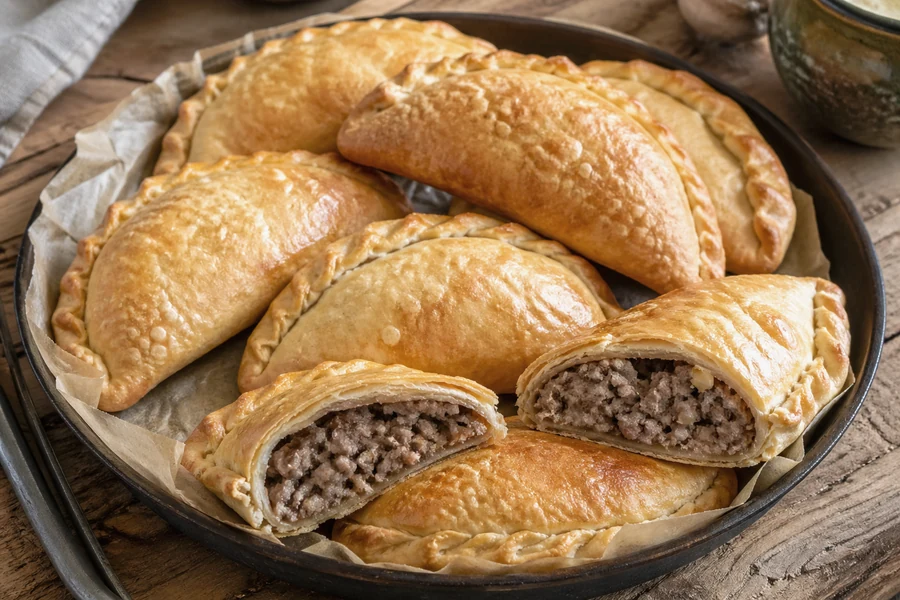
Kibinai are crescent-shaped baked pastries roughly fifteen centimetres long, with a buttery flaky pastry shell and a filling of finely chopped lamb or pork (or sometimes both) seasoned with onion, salt, pepper and traditional Karaim spices. They are the signature dish of the Karaim community of Trakai and one of the most regionally specific foods in Lithuania.
A standard portion is one to two kibinai per person; they are filling but not as heavy as cepelinai or kugelis. Kibinai are eaten hot or warm, often with a clear broth on the side - the broth was historically drunk from a small bowl alongside the pastry, a practice still followed in the older Karaim restaurants on Karaimų street in Trakai.
They are visually distinctive: the seal along the curved edge is twisted into a rope-like crimp called a "varpa" (literally "ear of grain"), and a properly-made kibinas has between fifteen and twenty even crimps along its edge. The crimp is both decorative and structural, sealing the meat juices inside during baking.
History and origins
According to Karaim tradition, the community settled in Lithuania in the late fourteenth century under Grand Duke Vytautas and became closely associated with Trakai. Karaimų Street, the kenesa, local museums and kibinai still mark that presence today. The community is very small, so exact numbers are better checked from current census or community sources rather than treated as fixed.
Kibinai (singular: kibinas) are Crimean in origin. The Crimean Karaim baked similar meat pastries, called "kibin" in Karaim language, before they came to Lithuania, and the dish travelled with them. Over six centuries the recipe absorbed local Lithuanian influences (more pork, less lamb; marjoram and dill from the regional herb tradition; rye-flour pastry in some older versions) but the basic shape, structure and crimping technique stayed remarkably true to the Crimean original.
The dish became famous beyond Trakai during the inter-war period, when day-tripping from Vilnius to Trakai became a popular outing. The two main historical Karaim restaurants - Senoji Kibininė and Kybynlar - both date their kibinai recipes to family traditions from the late nineteenth century. Both are still operating; both still serve recognisably the same dish.
The Karaim food tradition
Kibinai are part of a broader Karaim food tradition that also includes baked stuffed buns (such as tymbyl), savoury pies, and a strong tradition of mutton and dried-fruit cooking that reflects the community's Crimean origins. The Karaim follow a non-Talmudic form of Judaism and observe their own dietary restrictions - they do not eat pork, traditionally, although the modern Trakai kibinai recipes have largely accepted pork or pork-and-lamb mixes for the wider tourist market.
For travellers wanting the historically authentic version, ordering "lamb kibinai" (avienos kibinai) at the older restaurants is the closest you can get to the original. Some Karaim families still produce traditional all-lamb kibinai for community holidays and the Karaim Cultural Days festival in early summer.
Common mistakes when making them
The first mistake is overworking the pastry. Kibinai pastry should be just barely brought together, like a shortcrust, with cold butter and minimal handling. Overworked pastry becomes tough during baking.
The second mistake is too much filling. Each pastry takes about 50 grams of filling, no more. Overfilled pastries leak meat juice during baking and the seal opens up.
The third mistake is not using raw meat. Kibinai filling is mixed raw and cooks inside the pastry; pre-cooking the meat dries out the filling and removes the natural juices that make a kibinas tender. The internal temperature of the meat reaches safe levels during the bake.
Finally, the crimp matters. A loose crimp will open during baking and the kibinas leaks. Take time to make a tight, even, rope-like crimp along the entire curved edge.
How to serve kibinai
Kibinai are eaten hot or warm, with a small bowl of clear chicken or beef broth on the side. The traditional way is to take alternating bites of the pastry and small sips of broth from the side bowl; the broth softens the pastry crumbs and adds depth to the meat flavour. Modern restaurant versions sometimes pour broth over the kibinas, which is acceptable but not traditional.
A glass of wine works with kibinai better than with most Lithuanian dishes, particularly a light red. Lithuanian fruit wine (the Anykščių Vynas brand makes a quince and rhubarb wine that pairs unexpectedly well) is the local pairing. Beer is also fine; the Trakai craft brewery Kybynlar produces a beer specifically marketed as a kibinai pairing.
A small green salad on the side is normal but not required. The dish stands on its own.
Where to try the best ones in Lithuania
In Trakai, the two best-known restaurants are Senoji Kibininė and Kybynlar, both on Karaimų street. They serve essentially the same dish with small variations and both deserve a visit. Kybynlar tends to be slightly more tourist-oriented; Senoji Kibininė is the older operation and slightly more traditional.
Outside Trakai, kibinai are available at most Lithuanian restaurants in Vilnius and Kaunas, but the quality is rarely on the level of the Trakai versions. The exception is Etno Dvaras' "Karaim plate" option, which has been developed in consultation with the Trakai community.
For visitors timing a Trakai day-trip around the kibinai, the practical recommendation is to arrive at the Karaim restaurants by mid-afternoon (after the lunch coach groups have moved on) and order them fresh from the oven rather than from the warming counter. Batches and opening hours change, so order from the freshest tray available rather than planning around a fixed schedule.
Ingredients (makes 12 kibinai)
- Pastry: 500 g plain flour
- Pastry: 250 g cold unsalted butter, cubed
- Pastry: 2 large eggs, plus 1 yolk for glazing
- Pastry: 150 ml cold water (more if needed)
- Pastry: 1 teaspoon salt
- Pastry: 1 tablespoon white wine vinegar (helps tenderness)
- Filling: 400 g lamb shoulder, finely chopped (or use minced)
- Filling: 200 g pork shoulder, finely chopped (omit for traditional all-lamb version)
- Filling: 1 large onion, very finely chopped
- Filling: 1.5 teaspoons salt
- Filling: 1 teaspoon black pepper
- Filling: 1 teaspoon dried marjoram (oregano can substitute)
- Filling: 50 ml cold water (helps keep filling juicy)
- To serve: clear chicken or beef broth, hot, in small bowls on the side
Method
- Make the pastry: combine flour and salt in a bowl. Rub in the cold cubed butter with fingertips until it resembles coarse breadcrumbs. Beat the eggs with the vinegar and cold water; pour into the flour mixture and bring together quickly into a dough. Do not overwork. Wrap and refrigerate for 30 minutes.
- Make the filling: combine the chopped lamb (and pork if using) in a bowl with the very finely chopped onion, salt, pepper, marjoram, and the 50 ml cold water. Mix well with your hands. The filling should be moist but not wet; the cold water keeps it juicy during baking.
- Preheat oven to 200C (180C fan). Line two baking sheets with parchment.
- Roll the chilled pastry on a lightly floured surface to about 3 mm thickness. Cut circles about 14-15 cm in diameter (a small saucer or large bowl makes a good template). Re-roll trimmings as needed.
- Place a heaped tablespoon of filling (about 50 g) on one half of each circle, leaving a 1.5 cm border. Brush the border lightly with water.
- Fold the empty half of pastry over the filling and press the edges together firmly. Starting at one end, twist the curved edge into a rope-like crimp - lift a small section of the edge, press it down at an angle, and continue along the curve. Aim for 15-20 even crimps.
- Place the kibinai on the baking sheets. Beat the remaining egg yolk with a tablespoon of water and brush over each pastry. Pierce the top once with a fork to release steam.
- Bake for 35-40 minutes until deep golden brown. Rest for 5 minutes before serving with a small bowl of hot clear broth alongside.