What bulviniai blynai are
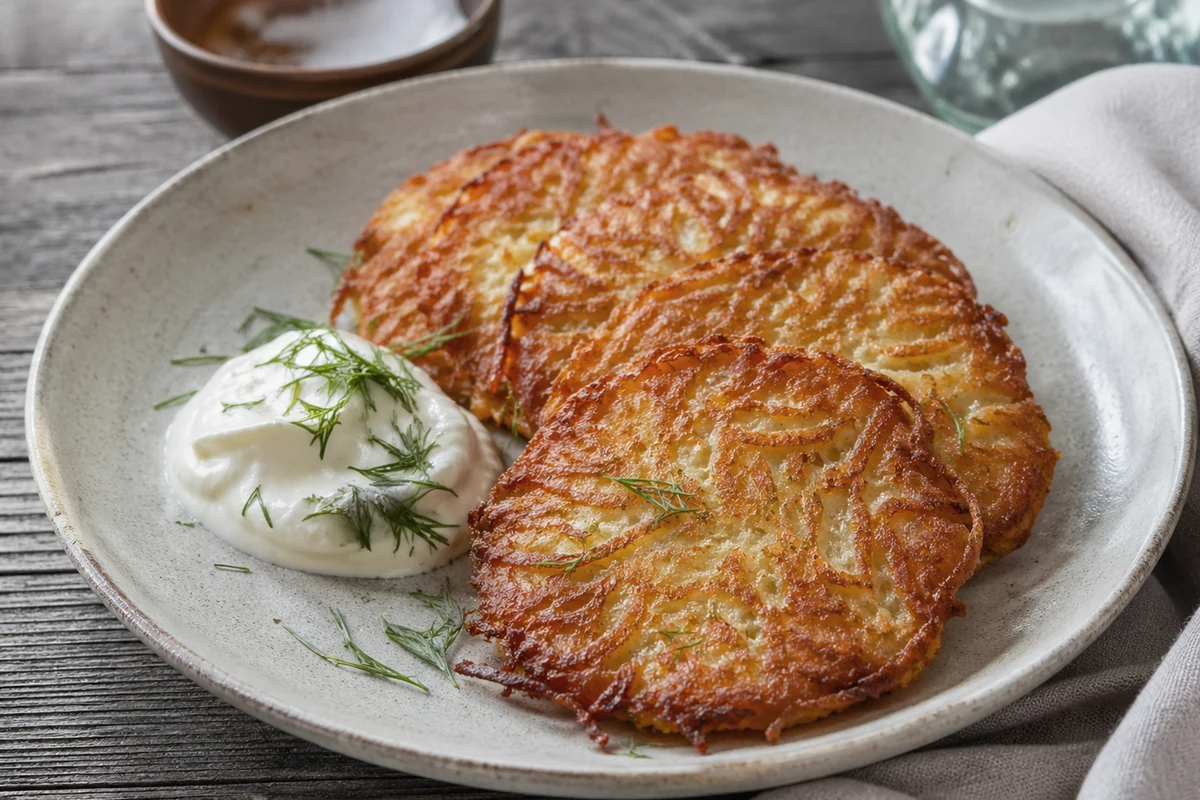
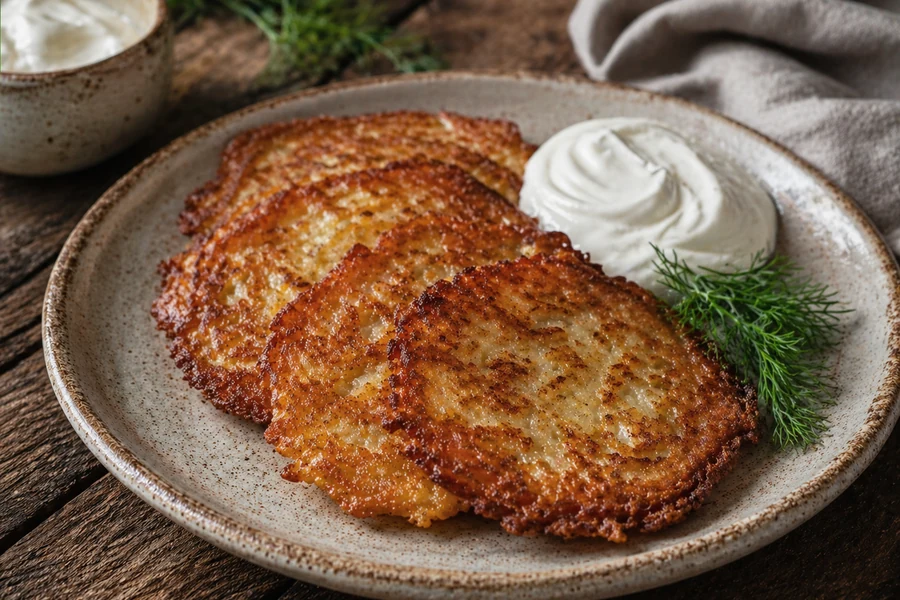
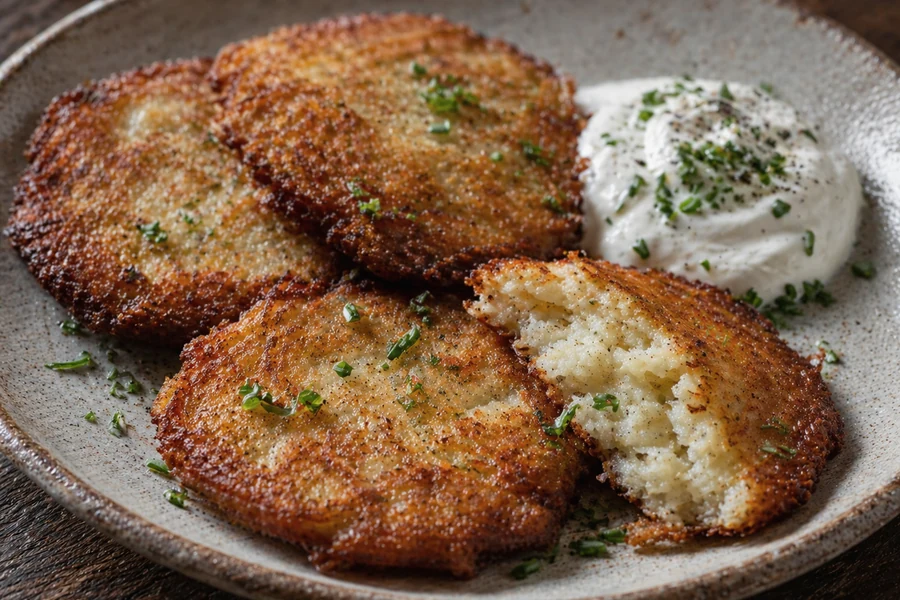
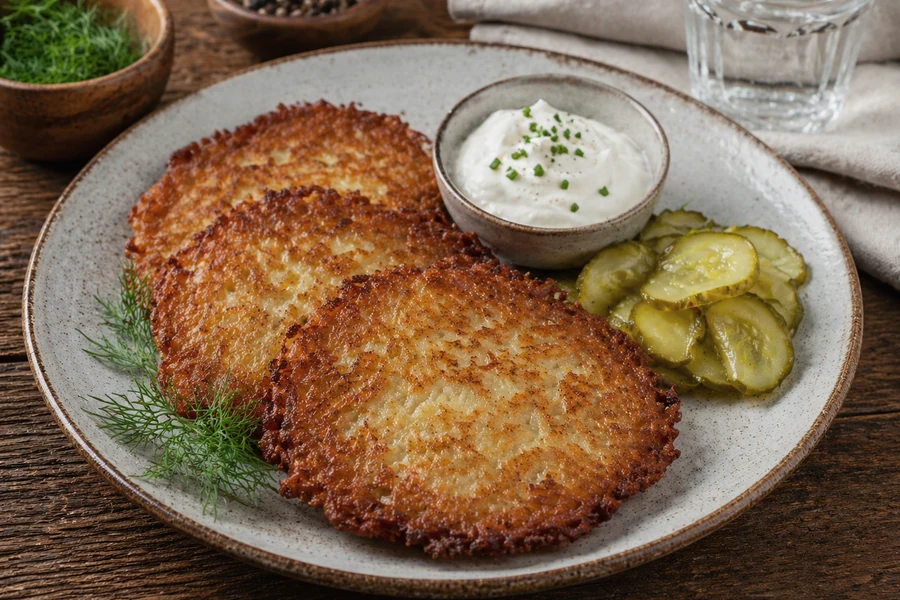
Bulviniai blynai are thin crispy pancakes made from grated raw potato bound with egg and a small amount of flour, fried in oil until deep golden on both sides. Each pancake is roughly the size of a saucer and about half a centimetre thick at the centre, with a crisp, lacy edge and a slightly chewy potato-strand interior. They are eaten hot with sour cream, mushroom sauce, or homemade berry jam, depending on the household tradition and the meal.
They are the everyday potato dish of Lithuanian cooking - the dish a typical Lithuanian grandmother would make for grandchildren on a Saturday afternoon, the dish that shows up at any school cafeteria, the dish a Sunday-lunch leftover-potato problem turns into. They are less famous than cepelinai because they are not restaurant-glamorous, but most Lithuanians eat bulviniai blynai far more often than cepelinai over the course of a year.
History and origins
Potato pancakes are a pan-Eastern-European dish; near-identical versions exist in Belarus (draniki), Poland (placki ziemniaczane), Ukraine (deruny), and across the Litvak Jewish tradition (latkes). All four versions share the same basic technique - grated raw potato, egg, fried thin and crispy - and differ mainly in seasonings and serving. The Lithuanian version uses the smallest amount of flour, leans most heavily on the potato, and traditionally adds a small amount of grated onion to the batter.
The dish is younger than its ubiquity suggests. Like kugelis and cepelinai, bulviniai blynai date to the post-1840s potato boom in Lithuania, when potatoes rapidly became the staple of rural cooking. Before potatoes, similar pancakes were made with grated turnips or with grain-based batters; both traditions persisted alongside potato pancakes through the late nineteenth century but had largely disappeared by the inter-war period.
The Lithuanian-Jewish version (latkes) developed alongside the Lithuanian pancakes and became famous internationally as a Hanukkah staple after spreading through the Lithuanian-Jewish diaspora. Latkes and bulviniai blynai are essentially the same dish; the Hanukkah association comes from the use of oil for frying, which fits the Hanukkah theme of oil miracles.
Regional variations
The most common variation is the binder. Some regions add a tablespoon of plain flour per kilogram of potato; others add no flour at all and rely on the potato starch alone. The latter version is older and gives a more delicate pancake but takes more skill.
Onion is sometimes included in the batter (Aukštaitija and Žemaitija); sometimes served separately as a fried-onion topping (Suvalkija); sometimes omitted entirely (some Dzūkija recipes). All three versions are valid.
Serving accompaniments vary by region and meal: sour cream is universal but sometimes accompanied by lingonberry jam (Aukštaitija, especially with sweet versions), mushroom sauce (autumn, especially in Dzūkija and the National Park sodybos), or a simple chopped fresh dill garnish (everywhere). A common modern variation adds shredded apple to the batter for a slightly sweet version.
Common mistakes
The first mistake is wet potato. The grated potato must be squeezed dry before mixing the batter. Wet potato gives soggy pancakes that absorb oil and stay floppy.
The second mistake is too much flour. A heaped teaspoon of flour per pancake is plenty; more than that and you have potato fritters, not bulviniai blynai. The pancake should taste like potato, not like flour.
The third mistake is too little oil. The pan needs about half a centimetre of oil at moderate-high heat. Less oil gives uneven browning and a leathery texture.
The fourth mistake is crowding the pan. Each pancake needs space to spread and crisp. Cook 3-4 at a time in a 30 cm pan, no more.
How to serve them
Serve hot, immediately, in stacks of three or four per plate. The traditional accompaniment is a generous spoonful of sour cream on top of the stack. Beyond that, regional and personal preferences vary: lingonberry jam, mushroom-and-cream sauce, smoked ham slices, or simply more dill.
A glass of cold buttermilk or kefir is the traditional drink pairing, particularly with breakfast or lunch versions. Beer works for dinner. Tea pairs surprisingly well with sweet versions (with apple in the batter, served with sour cream and jam).
They are not as good reheated as fresh, but cold leftovers eaten as a snack the next day with a cup of tea are a small everyday Lithuanian pleasure. They do not freeze well.
Where to try them in Lithuania
Almost every traditional Lithuanian restaurant serves them - they are a default starter or light-lunch option on every menu. In Vilnius, Etno Dvaras, Saula, Forto Dvaras, and Senoji Trobelė all serve good versions. In Kaunas, Berneliu Užeiga and Žaliakalnis Restaurant.
For the home-style version, sodybos in any region serve them as a routine breakfast option. The Dzūkija and Aukštaitija National Park sodybos serve them with foraged mushroom sauce in autumn, which is an upgrade worth seeking out.
For a high-end take, the Vilnius restaurant Sweet Root has previously served a version with smoked beef and burnt onion crème that turns the everyday pancake into a fine-dining starter; the menu rotates so check before going.
Ingredients (serves 4, makes ~16 pancakes)
- 1 kg waxy potatoes, peeled
- 1 medium onion, finely grated (optional)
- 2 large eggs
- 2 tablespoons plain flour (or omit for traditional flour-free version)
- 1 teaspoon salt
- 1/2 teaspoon black pepper
- 1 tablespoon lemon juice or white vinegar (prevents browning)
- Vegetable oil for frying (about 200 ml total)
- To serve: 200 ml sour cream, fresh dill, optional lingonberry jam or mushroom sauce
Method
- Grate the peeled potatoes on the finest holes of a grater (or use a food processor). Mix in the lemon juice immediately to prevent browning.
- Working in batches, place the grated potato in a clean tea towel or muslin and squeeze hard over a bowl. The potato should feel dry. Reserve the squeezed liquid in the bowl.
- Let the squeezed liquid sit for 10 minutes. Pour off the cloudy liquid carefully, leaving the white starch at the bottom of the bowl. Mix this starch back into the squeezed potato.
- Add the grated onion (if using), eggs, flour (if using), salt, and pepper to the potato. Mix well. The batter should be thick but spreadable.
- Heat half a centimetre of oil in a large heavy frying pan over medium-high heat until hot but not smoking.
- Drop heaped tablespoons of batter into the pan, flattening each into a thin disc with the back of the spoon. Cook 3-4 at a time. Do not crowd.
- Fry for 3-4 minutes per side until deep golden brown and crispy. Drain briefly on paper towels.
- Serve immediately, hot, in stacks with a spoonful of sour cream on top, fresh dill, and optional lingonberry jam or mushroom sauce on the side.