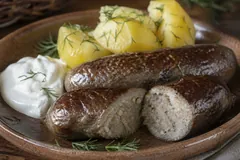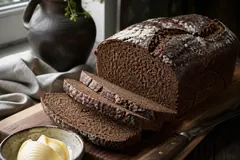
What skilandis is
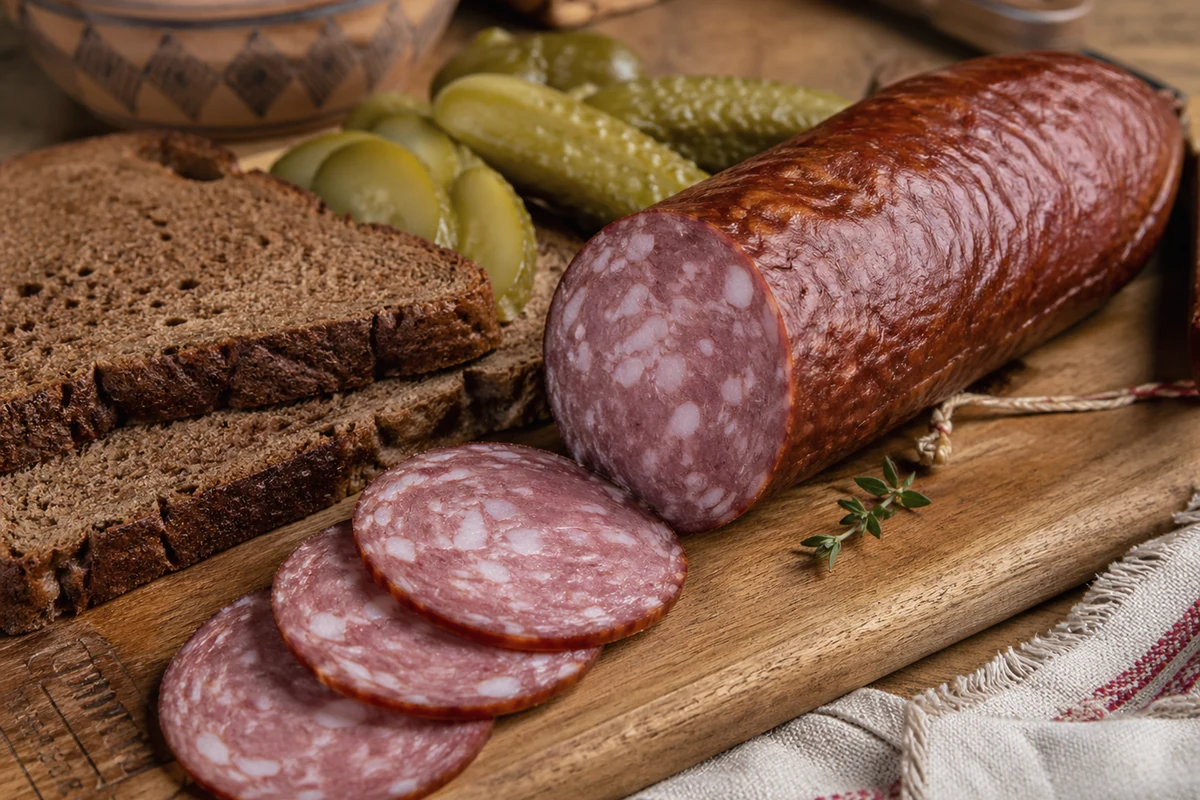
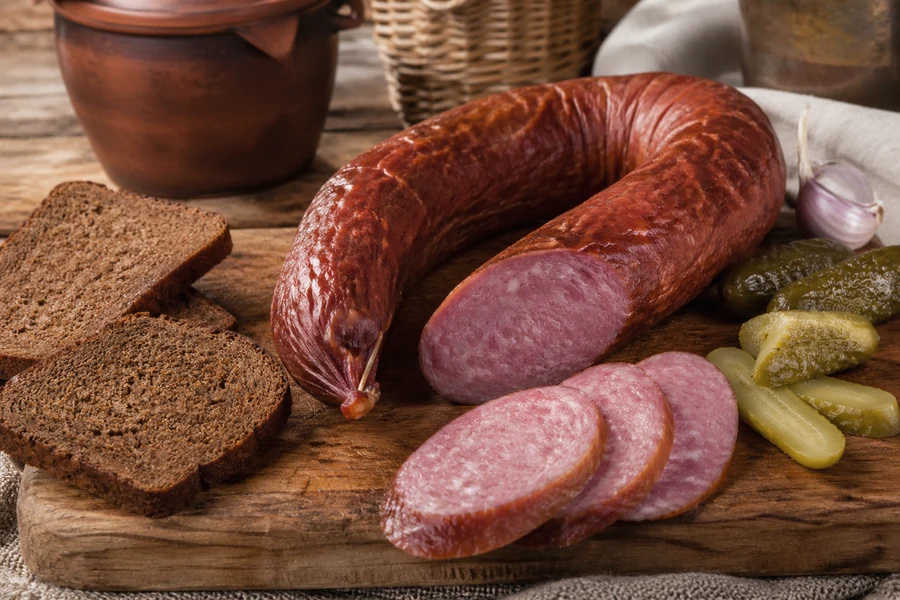
Skilandis is a large, oblong cured sausage made by stuffing chunked pork (mostly shoulder and leg, with some belly fat for richness) into a cleaned pig stomach, then smoking the filled stomach over alder or juniper wood and air-curing it for several weeks. The finished skilandis is roughly 25-30 centimetres long, 12-15 centimetres in diameter, weighs 1.5-3 kilograms, and has a distinctive dark, ridged exterior from the air-drying process.
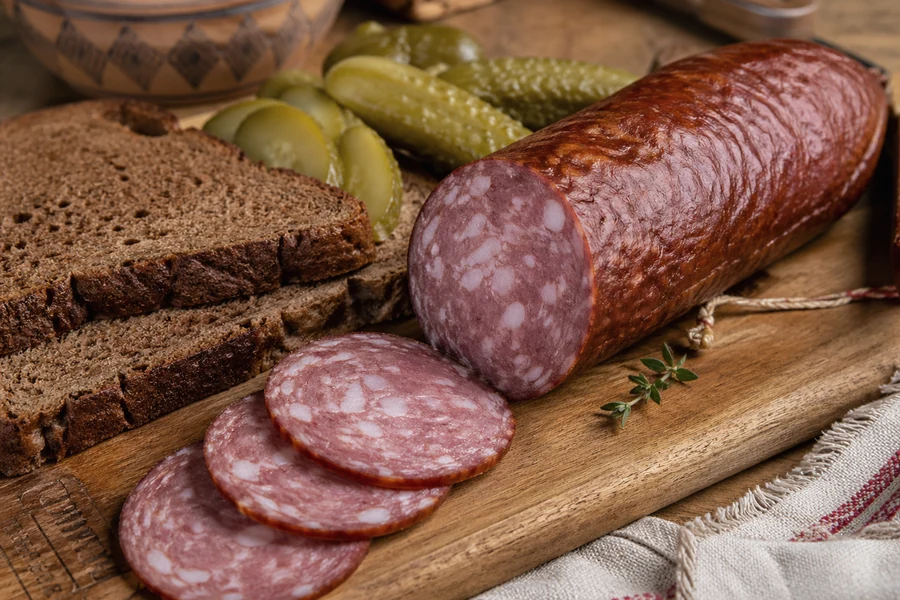
It is sliced thinly (2-3 millimetres) and eaten cold as charcuterie, typically with rye bread, raw onion, mustard, and sometimes a small glass of homemade fruit brandy. The flavour is strong - smoky, salty, deeply meaty, with the slightly funky tang that develops during long curing - and a single skilandis lasts a household for many weeks.
History and origins and EU protection
Skilandis is a traditional pig-slaughter product of the Suvalkija region, where the rural prosperity of the area (Lithuania's richest agricultural land) supported elaborate charcuterie traditions long before refrigeration. Production traditionally followed the autumn pig-slaughter (skerstuvės) - the pig was butchered in November or December, the various cuts processed simultaneously, and the skilandis was packed and smoked in time to start curing through the cold winter months for spring and summer eating.
The dish has been in continuous production in Suvalkija for at least 200 years. Reference to skilandis appears in Lithuanian-language texts from the early 1800s, and the curing technique has changed remarkably little: the same wood (alder or juniper), the same approximate timeline (8-12 weeks), the same approximate seasoning (salt, pepper, garlic, sometimes caraway).
Skilandis received EU Protected Geographical Indication (PGI) status in 2010 - the first Lithuanian product to receive EU food-name protection. Under the PGI rules, only producers in Suvalkija using the traditional method may legally label their product "skilandis"; producers elsewhere in Lithuania who use a similar method must label theirs differently (commonly "kindziukas", which is the same dish under a different regional name).
The PGI specification mandates pork only, alder or juniper smoking, a minimum 8-week curing time, and a list of permitted seasonings. Producers must be located within the historic Suvalkija boundaries. The protection has helped Suvalkija skilandis maintain its character and price premium against the cheaper industrial versions sold elsewhere.
How skilandis is made (overview, not for home production)
Authentic skilandis production starts with butchering a freshly-killed pig. The shoulder, leg, and some belly fat are cut into walnut-sized chunks (not minced - the texture matters), seasoned with salt, pepper, garlic and optional caraway, and packed tightly into a thoroughly-cleaned pig stomach. The stomach is sewn closed and tied securely.
The filled stomach is hung in a smoke chamber and cold-smoked over alder or juniper wood for 5-7 days, with the smoke kept below 25C so the meat does not cook. Cold smoking infuses the wood smoke deep into the meat without changing the texture.
After smoking, the skilandis is moved to a cool, dry, well-ventilated space (a traditional pirtis or specialist drying room) and air-cured for 6-10 weeks. During this period the moisture content drops significantly, the meat tightens, and the characteristic flavour develops. The exterior darkens and develops the distinctive ridged surface as the stomach contracts around the meat.
The finished skilandis is ready when it has lost roughly 30-35% of its starting weight and the exterior is firm to the touch. Properly made, it keeps for many months without refrigeration; the salt, smoke, and dehydration together prevent spoilage.
Why home production is impractical
Skilandis cannot reasonably be made in a home kitchen. The cold-smoking phase requires specialist equipment (an outdoor smoke chamber capable of generating smoke without heat above 25C); the curing phase requires several weeks of stable cool dry conditions that most modern homes cannot provide; and the food-safety risks of incorrectly-made cured meat are real and potentially serious.
Travellers wanting authentic Suvalkija skilandis should buy it from a producer rather than attempt the recipe. Several Suvalkija producers (Romnesa, Kaišiadorių Mėsa, Suvalkijos Skilandis) ship across Lithuania and the EU; the Marijampolė and Vilkaviškis farmers' markets sell skilandis from local family producers; and most Lithuanian supermarkets carry at least one PGI-protected skilandis brand.
A simpler home charcuterie alternative is dry-cured pork loin (lašinukai), which uses similar seasonings on a single piece of pork loin or belly and can be cured in a home fridge over 4-6 weeks with much lower equipment requirements. The flavour is different but the technique is accessible.
How to serve skilandis
Slice paper-thin (2-3 mm) on a sharp knife or a deli slicer. Each slice should be translucent at the edges. Serve at room temperature on a wooden board with rye bread, sliced raw onion, mild mustard, pickled cucumbers and beetroots, and optionally a small piece of strong cheese.
A small glass of trauktinė (Lithuanian herbal liqueur) or homemade fruit brandy (samanė) is the traditional drink. Beer also works; a strong dark Lithuanian beer such as Švyturys Baltas or a craft porter complements the smoke.
Skilandis is the centerpiece of a Lithuanian holiday cold-cut platter and is the most distinctive item on the traditional Christmas Eve (Kūčios) post-fast meal table on December 24th. Some families hang a skilandis from a kitchen beam through Christmas as a visible holiday decoration as well as food.
Where to buy and try the best skilandis
In Suvalkija itself, the Marijampolė and Vilkaviškis weekly farmers' markets are the best places to find small-producer skilandis from family farms. Producers will usually let you taste a slice before buying. Prices are €25-45 per kilogram.
In Vilnius, the Hales Turgus (Halės market) deli stalls usually have at least one PGI-protected Suvalkija skilandis available; the Vingio Parkas weekend artisan-food market in summer is another reliable source. Most upscale Lithuanian restaurants serve skilandis as part of a charcuterie starter.
For sit-down skilandis as a meal, the Suvalkija-themed restaurants in Marijampolė and Birštonas serve it as part of traditional Suvalkija "long boards" (ilgosios lentos) - a wooden board with rye bread, skilandis, smoked cheeses, and pickled vegetables, designed for slow eating and conversation.
Ingredients (a simplified home-curing approximation, NOT authentic skilandis)
- IMPORTANT: This is a "Suvalkija-style cured pork" recipe, not authentic PGI skilandis
- 2 kg pork shoulder, cut in 2-3 cm chunks
- 500 g pork belly, cut in 2-3 cm chunks
- 60 g sea salt (3% of meat weight)
- 5 g curing salt #2 (sodium nitrite + nitrate, for safety)
- 15 g black pepper, coarsely ground
- 8 garlic cloves, minced
- 1 tablespoon caraway seeds, lightly crushed
- 1 large pig stomach, thoroughly cleaned (or substitute with synthetic large casings)
- Specialist equipment: cold smoker, curing chamber with controlled humidity (75-85%) and temperature (10-15C)
Method (overview only - this is specialist charcuterie)
- IMPORTANT: This is a high-level overview only. Real skilandis production requires specialist training, equipment, and food-safety knowledge. Do not attempt without consulting an experienced charcuterie maker.
- Combine the chunked pork shoulder, pork belly, salt, curing salt, pepper, garlic, and caraway. Mix thoroughly. Refrigerate for 24 hours to allow the salt and cure to penetrate.
- Stuff the seasoned meat tightly into the cleaned pig stomach. There should be no air pockets. Sew the opening closed with cotton twine.
- Hang in a cold smoker (smoke temperature below 25C) for 5-7 days. Use alder or juniper wood. The skilandis should not cook during smoking; it should simply absorb smoke flavour.
- Move to a curing chamber maintained at 10-15C and 75-85% humidity. Hang for 6-10 weeks. The skilandis is ready when it has lost approximately 30-35% of its starting weight and the exterior is firm.
- Wrap in cotton or linen and store in a cool, dry place. Slice paper-thin to serve.
- For most travellers and home cooks, the practical recommendation is: do not attempt this. Buy authentic Suvalkija PGI-protected skilandis from a producer. The recipe is included for reference and educational interest only.