Mindūnai: eastern lake fishing
The lake-fishing exhibition at the Mindūnai Fishing and Hunting Museum presents equipment used in eastern Lithuania in the nineteenth century, an authentic fisherman's hut, a fish smokehouse and a barn. Its oldest exhibit is a four-metre boat recovered from Lake Peršokšnai and dated by the museum to the fifteenth century.
The museum gives visitors a better vocabulary for the region. A wooden boat, smokehouse and lakeside homestead stop looking like decorative tourism once their working relationship is understood.
Plan an Aukštaitija and Labanoras stay
Nida and the Curonian Spit
The Nida Fisherman's Ethnographic Homestead uses a restored household to explain coastal family life and work. The Curonian Spit History Museum adds wider context about settlement, fishing and landscape change.
Fishing in the Curonian Lagoon is included in Lithuania's inventory of intangible cultural heritage. The national culture centre describes the traditional allocation of commercial fishing grounds and the continuing knowledge held by fishing families and coastal communities.
The lagoon is a managed and environmentally pressured fishery, and today's commercial methods, quotas and conservation responsibilities differ from recreational angling.
Kintai, Rusnė and smoked fish
Lithuania Travel identifies Kintai as a fishing settlement known for smoked fish. The Šilutė Tourism Information Centre directory lists certified or recognised regional artisans associated with smoked bream, smoked fish and Pamarys fish soup.
For the visitor, the simple advice is to buy from a recognised food business or eat at a restaurant. Ask what the fish is, where it came from and how it was prepared when provenance matters. A sales location by the lagoon does not establish that every fish was caught locally or on the same day.
Fish soup
Pamarys fish soup belongs to the food culture of Lithuania's lagoon and lower Nemunas region. Recipes vary across the region. The Šilutė tourism centre publishes a collection of regional fish-soup recipes that reflects this variety.
Use a tasting, craft demonstration or local event when available, but verify the date and provider before adding it to an itinerary.
What recreational anglers may do with a catch
The AAD FAQ states that fish caught in recreational fishing is for personal use and may not be sold, in both inland and sea fishing.
If you plan to eat a legally retained fish:
- identify it correctly;
- check the date, size and number before retaining it;
- keep it separate from another angler's catch;
- chill it promptly;
- use an approved preparation place;
- follow the accommodation's waste-disposal rules.
Release is always the better choice when identification or legality is uncertain.
A culture-led fishing route
Three days in the east
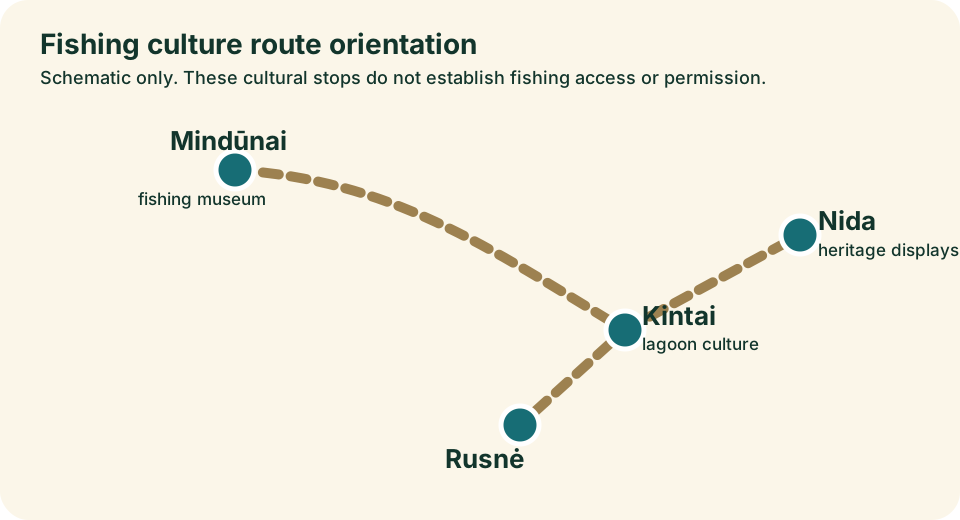
Base near Mindūnai or Labanoras. Combine one lake session with the fishing museum, observation tower and a rural stay.
Four days in Lithuania Minor
Begin in Šilutė or Rusnė for a legal guided fishing or boat day. Continue to Kintai for smoked-fish culture, then Klaipėda and Nida for the Curonian Spit museums and lagoon landscape.
Fishing festivals and public events
Two recurring winter events are useful for visitors who want fishing culture without building the whole holiday around catching fish.
- Stintapūkis in Neringa presents Curonian Spit smelt traditions, community events, food, crafts and, in some years, angling activities or competitions. The programme and ice conditions change annually.
- Palanga Smelt Festival is a recurring coastal food and fishing celebration. Dates and programmes are announced for each edition; use the current tourism calendar before planning a visit.
Check the current Neringa and Palanga tourism calendars before planning your visit. A festival may proceed as a cultural event even when fishing conditions change, and participation in a competition can have separate registration, permit and safety rules.
Share a fishing-history correction or story
LithuaniaLinks welcomes factual corrections and original community stories about boat building, smokehouses, museums and responsible angling. Contributors must have permission to share every photograph and should avoid revealing a sensitive spawning or conservation location. Guides, skippers, rural hosts and heritage providers can also read the free directory invitation. A donation is voluntary and does not affect verification, placement or editorial treatment.
Official sources
- Mindūnai Fishing and Hunting Museum
- Fishing in the Curonian Lagoon, Lithuanian intangible heritage inventory
- Kintai, Lithuania Travel
- Neringa meaningful travel and local fish food
- Šilutė regional artisans
- Šilutė tourism publications
- Neringa Tourism: Stintapūkis
- Palanga Tourism Information Centre events