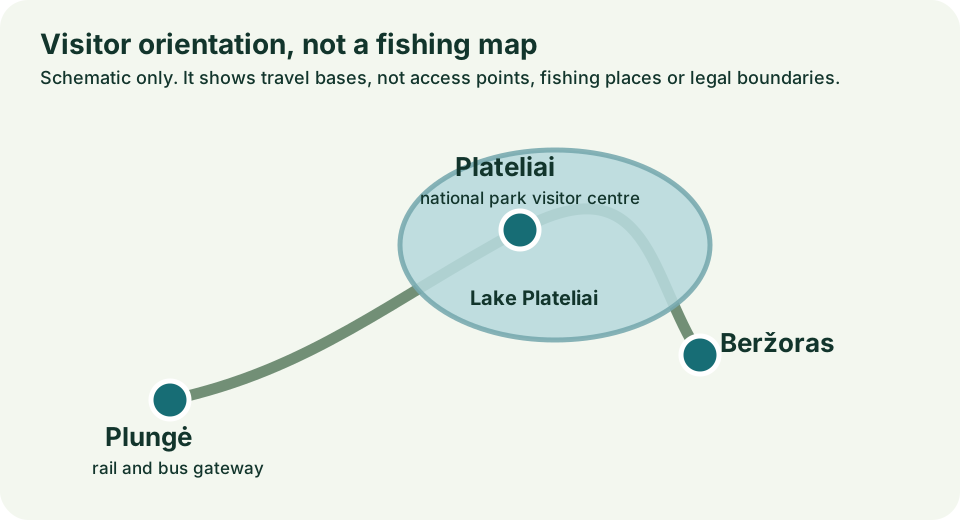
Plateliai is a large, deep lake with islands, bays and conservation importance. Weather and boat choice matter, and not every part of the shore is a public launch or fishing place.
What is in the lake system?
Plungė Tourism Information Centre lists pike, perch, roach, bream, tench, burbot, vendace and other fish in the national park's lakes. The protected-area service highlights the relict Plateliai whitefish as part of the lake's exceptional natural value.
These descriptions are ecological and visitor information. They are not permission to target or retain every named species. Deep-water species, closed periods and special fishing conditions must be checked in the current AAD memo and ALIS.
Check the ordinary fish sizes, numbers and compulsory-release rules, then verify the exact Plateliai conditions for the travel date.
Verify the exact water in ALIS
Open ALIS and search with the Lithuanian water name, beginning with Platelių ežeras for Lake Plateliai. Match the municipality or map position before selecting a product. Read the product conditions and the water or fishery user shown by the system, then save the confirmation and receipt offline.
For Beržoras, Ilgis or another nearby alternative, start a new search with that water's exact Lithuanian name. Do not assume that a permission bought for Lake Plateliai covers a neighbouring lake, or that an alternative lake has the same boat, protected-area or fishing conditions. If ALIS does not make the result clear, ask AAD or the park visitor centre to identify the correct current route before paying.
Choose between Plateliai and a smaller park lake
Lake Plateliai
Choose Plateliai when you want the main visitor infrastructure, a larger body of water and easy access to the park's other attractions. Use a boat and guide suited to open-lake conditions.
Beržoras, Ilgis and other waters
Smaller lakes can feel more sheltered and intimate, but their water status, access and rules may differ. Do not assume that a permit or rental associated with Plateliai covers another lake.
A private pond at a rural stay
This can be the simplest beginner or family option. Ask whether fishing is included in the accommodation price, whether catch-and-release is required and how retained fish are charged.
A useful base
Plateliai village is the practical centre for the national park visitor centre, food and local services. A rural property on the lake edge can be quieter, but check how far it is from the actual water and whether the path works for your group.
Read the Žemaitija regional guide
Compare accommodation in Žemaitija
Getting to Plateliai
By train or coach
Plungė is the public-transport gateway. Plungė Tourism Information Centre states that the railway and bus stations use the same address and that local buses continue to Plateliai. Its transport page links to LTG Link for trains, the Plungė bus operator for the local timetable and the national coach booking system for longer journeys.
This makes a no-car stay possible, but only when the local bus fits the check-in and return journey. Search the actual date and tell the host which stop and service you intend to use. If the property is in Paplatelė or elsewhere around the lake, “Plateliai” in the address or marketing does not mean it is walkable from the village stop.
A night in Plungė can be a sensible buffer when an evening train misses the final bus or when an early onward train would require an uncertain transfer.
By car
A car is useful for properties around the lake, the Cold War Museum and additional park attractions. Confirm parking at the accommodation and launch. Do not use an unmarked shore track as a boat ramp, even if it appears on a satellite map.
Detailed fishing accommodation and transport planner
Choosing where to stay
The official Plungė tourism directory separates guest houses, rural tourism properties, hotels, private accommodation and campsites. The national park also lists accommodation around Plateliai. Use these as current leads and confirm each fishing claim directly.
Plateliai village
This is the simplest choice without a car. The visitor centre, food and local bus are easier to reach, and a guide can give a clear meeting point. Confirm whether the room is actually in the village and how guests reach the chosen lake access.
Lake-edge hotel or guest house
Useful when the property has a documented launch, suitable boat and safe path. Ask whether “lake view” means direct access, whether fishing is allowed from that shore, and whether facilities are shared with swimmers or events.
Paplatelė or a rural homestead
Better for quiet, space and a family group, but normally more car dependent. A property may advertise a pond as well as proximity to Lake Plateliai. Ask which water the fishing offer refers to and which rules and charges apply.
Campsite
A lower-cost summer option for anglers with their own transport. Confirm the opening season, drinking water, showers, cooking rules, secure storage, electricity and whether a late return from the lake is permitted.
Booking questions
- Exact room and lake-access map pins.
- Transfer from Plungė or the local bus stop.
- Walking surface and distance to the launch.
- Boat, motor and lifejacket arrangements.
- Equipment storage and drying space.
- Food and breakfast outside the main summer season.
- Rules for preparing legally retained fish.
- Cancellation process when wind makes the lake unsuitable.
A three-day fishing and travel plan
Day 1: park orientation
Visit the national park visitor centre, verify lake and boat arrangements, and take a short evening shore session only where access is confirmed.
Day 2: main fishing day
Use an early guided boat session or a host-provided rowing boat in appropriate conditions. Keep the afternoon for the Šeirė trail, Plateliai village or rest.
Day 3: family and history day
Choose the Cold War Museum, cycling, a yacht or sightseeing trip, or another short fishing session. This gives non-anglers a real reason to stay rather than asking them to wait beside the water.
Boats and weather
Lake Plateliai is large enough for conditions to change. Confirm:
- whether the boat is unpowered and rowed, electrically powered or has another type of motor;
- where it may be used;
- whether the person renting it provides lifejackets and a safety briefing;
- whether park or national watercraft restrictions apply on the date;
- how the booking changes in strong wind.
Never transfer a motor from your own equipment onto a rental boat without written permission and a rule check.
Conservation matters here
The lake and surrounding wetlands are the reason the national park exists. Keep away from islands or shore zones where landing is restricted, avoid disturbing birds and use established launch points. If a fish must be released, handle it in the water where possible and have tools ready before fishing.
The Plateliai whitefish is part of the lake’s natural heritage. Learn about its ecological importance, and avoid making it a trophy or food target on a visitor fishing trip.
Local fish and preparing your catch
Freshwater fish appears in regional visitor material, but restaurant sourcing changes and should not be inferred from the lake. A menu description is not evidence that fish was locally caught. Ask the restaurant when provenance matters.
Recreational catch is for personal consumption and may not be sold. Confirm whether your accommodation has a legal, hygienic place to clean and cook retained fish.
Official sources
- Žemaitija National Park
- Plungė Tourism Information Centre fishing page
- Plungė tourism activities directory
- Plungė and Plateliai transport information
- Plateliai accommodation directory
- LTG Link train tickets (partner booking site)
- AAD current fishing memo
- ALIS environmental-permit system
- AAD rules for watercraft with or without an electric motor
- AAD rules for watercraft with an internal-combustion engine
Fish photograph catalogue
Licensed reference photographs for identification and trip planning. A photograph does not show that a species may legally be targeted, retained, transported or used as bait; check the current rule beside the relevant written guidance.


